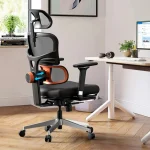


Aploda.com – The best ergonomic office chair for individuals over 6 feet tall must feature an adjustable seat depth of at least 19 inches, a high backrest with integrated lumbar support, and a heavy-duty hydraulic gas lift to accommodate longer leg lengths and torso heights.
Finding the right office chair when you are over 6 feet tall is not just about comfort; it is a necessity for long-term spinal health. Standard office chairs are typically designed for the “average” user, which usually means someone between 5’5″ and 5’10”. When a tall person sits in a standard chair, the seat pan is often too short, failing to support the thighs, while the lumbar support sits against the middle of the back rather than the lower curve of the spine. This mismatch forces the body into awkward postures, leading to chronic back pain, hip strain, and reduced circulation in the legs.
Key Considerations for Tall Users
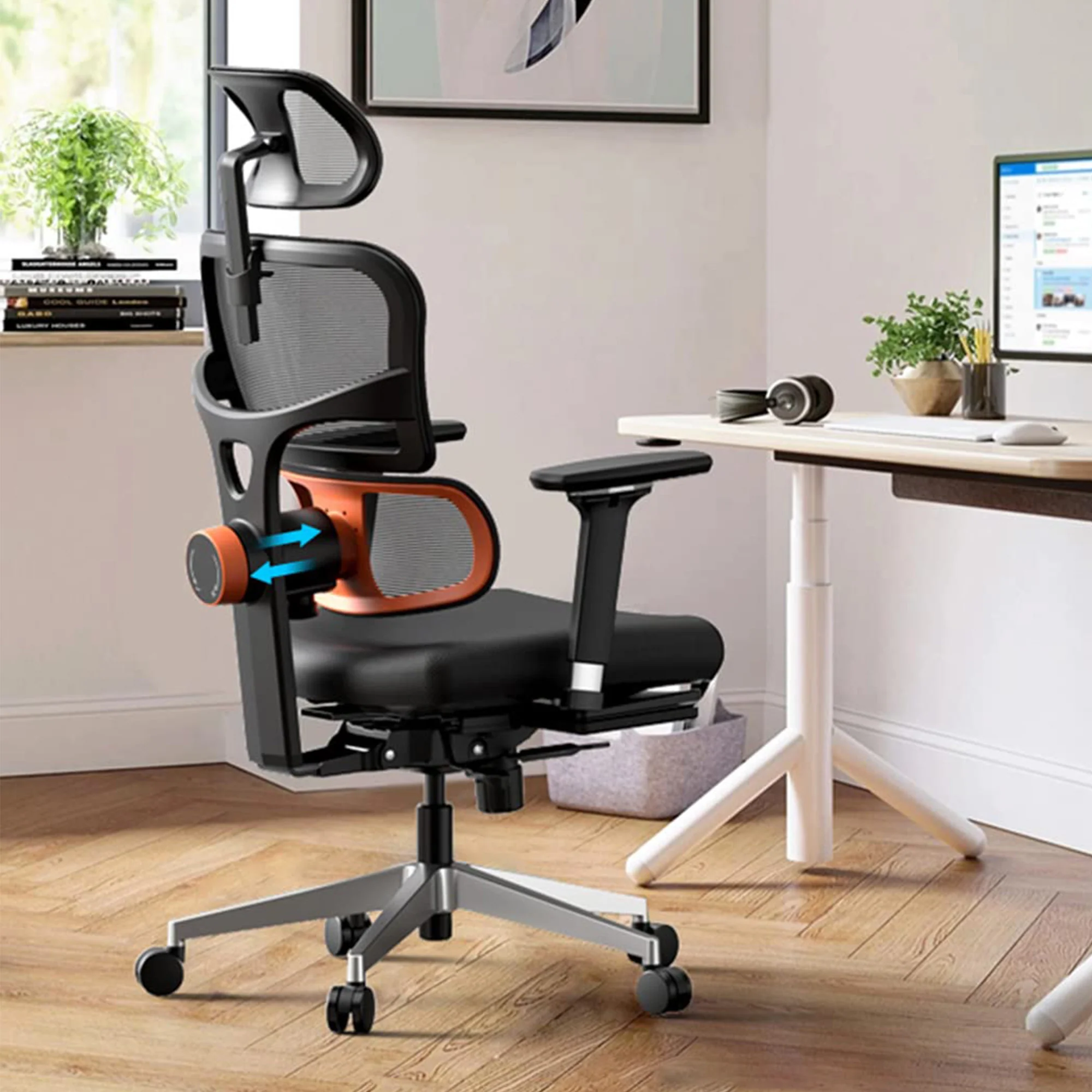
When shopping for a chair, the most critical dimension is the seat depth. If the seat is too shallow, your knees will extend far beyond the edge of the seat, putting pressure on your lower thighs and cutting off blood flow. Conversely, if the seat is too deep, you cannot sit all the way back, rendering the backrest useless. Look for chairs with a seat slider mechanism that allows you to adjust the seat depth to match your femur length. Ideally, you want a two-to-three-finger gap between the edge of the seat and the back of your knees.
Another often overlooked factor is the height of the backrest. A tall person needs a backrest that reaches at least the shoulder blades, if not the head. This ensures that the lumbar support can be positioned exactly where your lower back curves inward. If the lumbar support is fixed and non-adjustable, it will likely hit your mid-back, causing you to slouch or hunch forward to compensate. Adjustable height backrests or lumbar supports are essential features for anyone over 6’2″.
Comparing Essential Specs for Tall-Friendly Chairs
| Feature | Standard Office Chair | Tall-Friendly Ergonomic Chair |
|---|---|---|
| Seat Depth | 16 – 18 inches | 19 – 22 inches |
| Backrest Height | 20 – 24 inches | 26 – 32 inches |
| Weight Capacity | 250 lbs | 300 – 400 lbs |
| Gas Lift Range | 3 – 4 inches | 5+ inches |
Steps to Properly Adjust Your Chair
Once you have invested in a chair designed for your height, you must calibrate it to your specific measurements. Follow these steps to ensure you are getting the full ergonomic benefit of your equipment:
- Adjust the seat height so that your feet are flat on the floor and your knees are at a 90-degree angle. Your thighs should be parallel to the floor without putting excessive pressure on the underside of your legs.
- Slide the seat pan forward or backward until there is a small gap of about two inches between the back of your knees and the front edge of the chair.
- Move the lumbar support up or down until it rests firmly in the natural inward curve of your lower back. You should feel supported, not pushed forward.
- Set the armrests to a height that allows your shoulders to relax, with your elbows bent at approximately 90 degrees. Your forearms should rest lightly on the armrests without causing your shoulders to shrug.
- Adjust the tilt tension so that you can recline slightly without feeling like you are falling backward, providing a dynamic range of motion throughout your workday.
Common Mistakes Tall People Make
A frequent error is assuming that “heavy-duty” chairs are the same as “tall-friendly” chairs. While many heavy-duty chairs are built for larger individuals, they may prioritize width over height. Always check the specific backrest height and seat depth measurements rather than just the weight capacity. A chair can support 400 pounds but still have a seat pan that is far too short for someone with long legs.
Another mistake is neglecting the headrest. For tall individuals, a headrest that is too low can force the neck into a permanent forward-tilted position, which is a major contributor to “tech neck” and tension headaches. If you choose a chair with a headrest, ensure it has enough vertical travel to support the base of your skull rather than your upper shoulders.
Risks of Ignoring Ergonomics
Ignoring the need for a tall-specific chair leads to more than just minor aches. Over time, sitting in a chair that does not fit your frame can cause permanent postural changes. Your pelvis may tilt incorrectly, leading to chronic lower back pain or sciatica. Additionally, because tall people often have to adjust their monitor heights higher, a poor chair that forces you to slouch also creates a chain reaction of misalignment up through your thoracic spine and into your cervical spine (neck).
Frequently Asked Questions
Q: Is it worth paying extra for a tall-specific ergonomic chair?
A: Yes. Because standard chairs do not offer the necessary adjustment range, you will likely end up spending more on chiropractic care, physical therapy, or replacing cheaper chairs that break under the stress of a larger frame.
Q: Can I use a footrest to compensate for a chair that is too short?
A: While a footrest can help with leg alignment if your chair is too high, it cannot fix a seat that is too shallow or a backrest that is too short. It is a band-aid solution, not a cure for a poorly fitting chair.
Q: How do I know if the hydraulic cylinder is tall enough?
A: Check the “seat height range” in the product specifications. For someone over 6 feet, look for a cylinder that offers a maximum seat height of at least 21 to 23 inches from the floor to accommodate your longer legs.
Investing in your workspace is an investment in your productivity and health. By prioritizing adjustable depth, high backrests, and proper hydraulic range, you can transform your office experience from a source of daily discomfort into a foundation for long-term wellness.
📷 Photo by eurekaergonomic.com