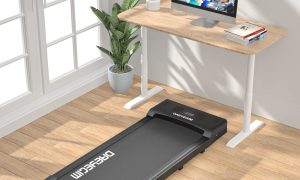




Aploda.com – Leveling an under desk treadmill on uneven wooden floors requires using high-density rubber shims or specialized anti-vibration mats to bridge gaps, ensuring the machine remains stable to prevent internal motor damage and mechanical noise.
Placing a treadmill on an uneven wooden floor is more than just an annoyance; it is a recipe for long-term equipment failure. Wooden floorboards often warp, sag, or crown over time, creating subtle slopes or dips that are not always visible to the naked eye. When a treadmill frame sits on an unstable surface, the metal chassis experiences constant torque every time you take a step. This uneven stress can lead to belt misalignment, excessive motor strain, and irritating squeaking sounds that reverberate through the floorboards.
Identifying the Source of Instability
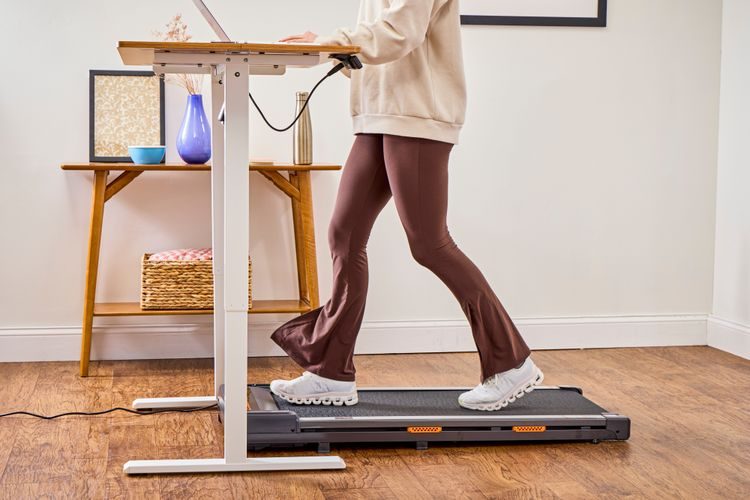
Before you start adding materials, you must pinpoint exactly where the treadmill is rocking. Most under-desk treadmills have adjustable feet, but these are often limited in range. Start by placing the treadmill in your desired location and testing each corner by applying light pressure. If the machine rocks diagonally, you are dealing with a classic case of an unlevel floor rather than a machine defect.
📷 Photo by verywellfit.com
Wooden floors are particularly tricky because they possess a degree of “give” or bounce. Unlike concrete, wood reacts to humidity and temperature, meaning your treadmill might feel stable on a dry winter day but start wobbling during a humid summer. Therefore, your leveling solution must be somewhat compressible yet firm enough to provide consistent support.
The Step-by-Step Leveling Process
Follow these steps to stabilize your unit effectively without damaging your hardwood finish.
- Clear the area and inspect the floorboards for loose nails or protrusions that could puncture the treadmill frame or mat.
- Place a long carpenter’s level on the frame of the treadmill to determine which direction the slope is leaning.
- Position a high-density, 1/4-inch thick rubber mat underneath the entire footprint of the treadmill to absorb floor irregularities and vibration.
- If the unit still wobbles after placing the mat, identify the specific corner that lacks contact with the floor.
- Slide a thin rubber shim or a piece of heavy-duty felt under the specific corner until the treadmill frame is perfectly square.
- Test the stability by walking at a slow pace for five minutes, then check if any shims have shifted.
- Once stable, adjust the factory-installed leveling feet on the treadmill to fine-tune the final height and tension.
Recommended Materials for Leveling
Not all materials are created equal when it comes to leveling heavy equipment on wood. Avoid using cardboard or plastic shims, as these tend to compress permanently or slide out of place due to the rhythmic vibration of the treadmill motor.
| Material Type | Pros | Cons |
|---|---|---|
| High-Density Rubber Mat | Excellent grip, protects wood, absorbs sound | Heavy, can leave marks on some sensitive finishes |
| Solid Rubber Shims | Durable, non-slip, precise height adjustment | Can be difficult to cut if you need custom sizes |
| Cork Underlayment | Eco-friendly, good vibration dampening | Can compress over time under heavy weight |
| Felt Furniture Pads | Cheap, easy to install | Will flatten quickly, not ideal for heavy treadmills |
Risks of Ignoring Unlevel Floors
Many users assume that a slight wobble is acceptable as long as the treadmill stays upright. This is a dangerous misconception. When the frame is not level, the treadmill belt naturally gravitates toward the lower side. This causes the belt to rub against the side rails, leading to frayed edges and premature belt wear. Furthermore, the motor must work significantly harder to pull a misaligned belt, which can lead to overheating and an eventual blown fuse or motor failure.
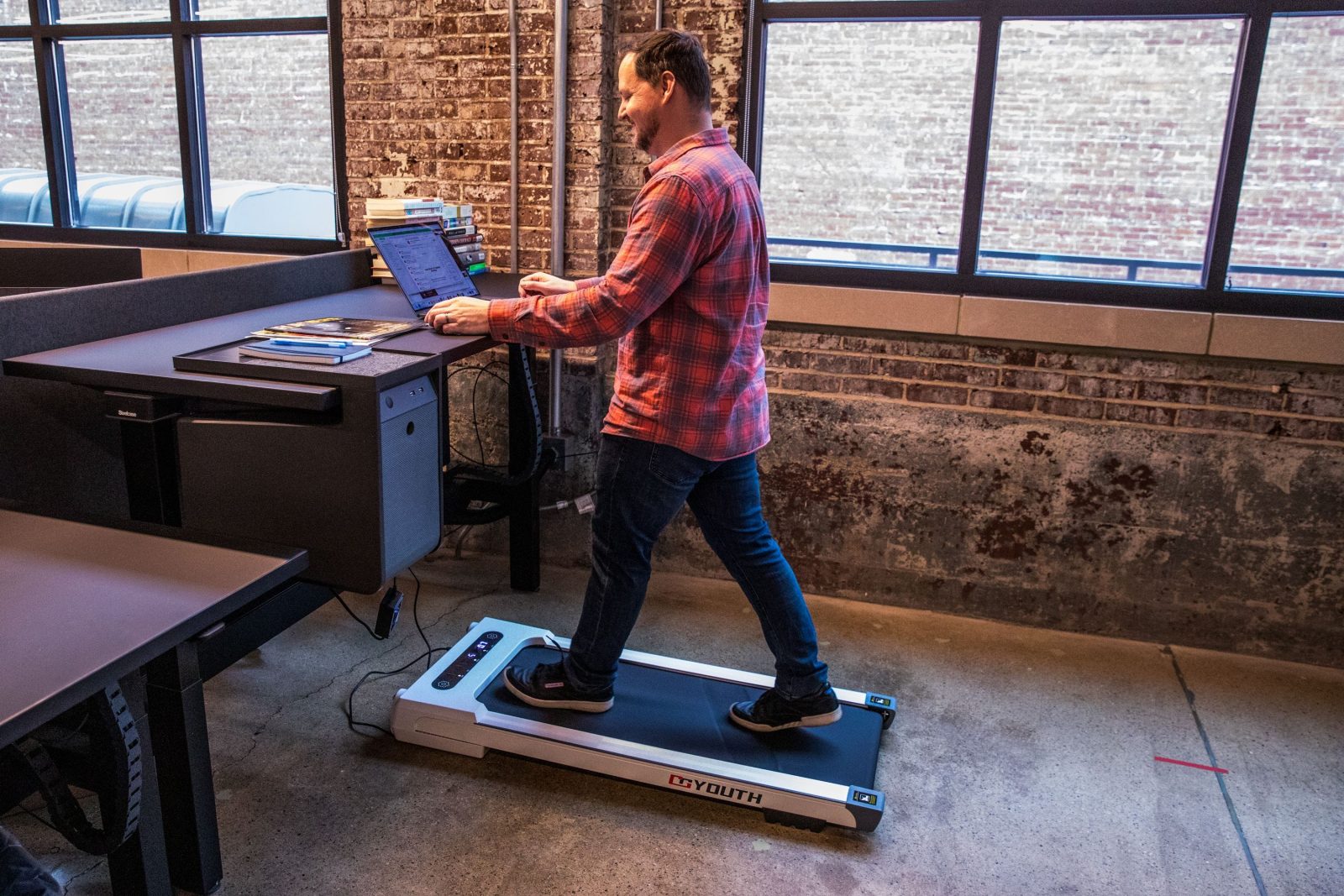
Beyond the mechanical risks, there is the issue of structural noise. Wooden floors act like a sounding board. A treadmill that is not perfectly level will transfer its vibration directly into the floor joists. This creates a “thumping” sound that is often audible in rooms below or adjacent to your workspace. Proper leveling acts as a buffer, decoupling the machine from the structure of your home.
📷 Photo by runnersworld.com
Common Mistakes to Avoid
Avoid using folded paper, magazines, or thin plastic shims. These materials lack the structural integrity required to support a treadmill, which can weigh anywhere from 50 to 100 pounds, plus the weight of the user. When these materials compress, the treadmill becomes unstable again, forcing you to repeat the process. Another common error is over-adjusting the leveling feet on the treadmill itself. If you extend the feet too far, you reduce the surface area contact with the floor, creating a “stilts” effect that makes the machine feel even more unstable.
Always aim for the lowest profile possible. The closer the treadmill is to the actual floor, the more stable it will be. If your floor is extremely uneven, consider moving the treadmill to a different spot in the room where the floorboards might be more level, such as near a wall where the floor joists are typically supported by the foundation.
Q: Can I use a rug to level my treadmill?
A: It is generally discouraged. Thick rugs can trap heat under the treadmill motor and provide an unstable, squishy surface that makes it difficult to maintain balance while walking.
Q: How do I know if the treadmill is level enough?
A: Your treadmill is properly leveled when it does not rock when you press down on any corner, and the belt remains centered on the deck during use without drifting to one side.
Q: Should I bolt the treadmill to the floor?
A: Never bolt your treadmill to a wooden floor. Doing so will damage the wood, and the vibration from the treadmill may eventually cause the bolts to loosen, resulting in even more structural damage to your flooring.
📷 Photo by nytimes.com