

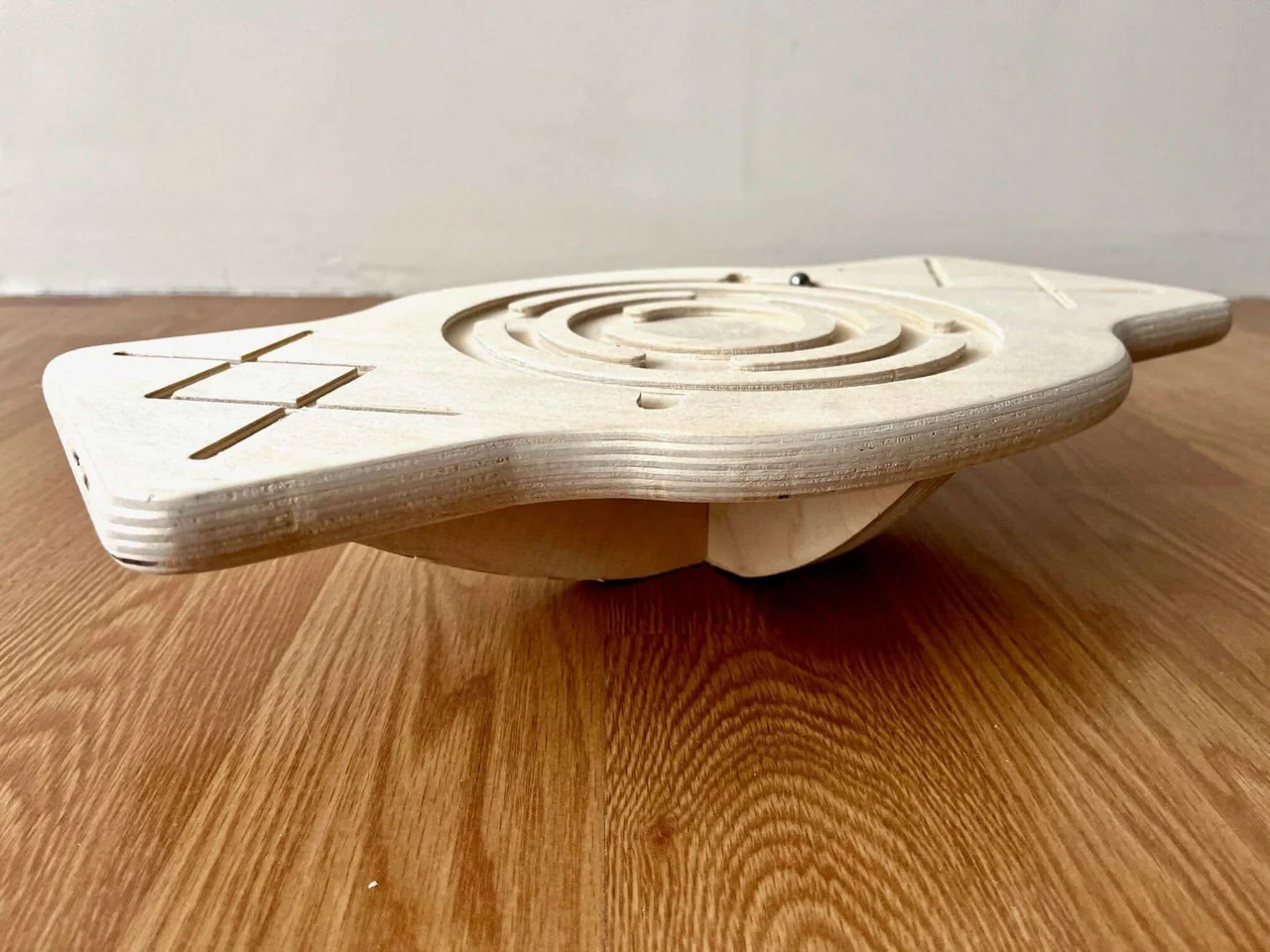
Aploda.com – Using a balance board at a standing desk increases core muscle activation by forcing the body to perform constant, micro-adjustments to maintain equilibrium, effectively turning static standing into an active, low-intensity workout.
The transition from a sedentary chair-based lifestyle to a standing desk is a positive health step, but static standing can eventually lead to its own set of issues, such as lower back strain and venous pooling. Integrating a balance board introduces dynamic instability, which serves as a catalyst for deeper muscular engagement. When you stand on an unstable surface, your brain sends rapid signals to your core—specifically the rectus abdominis, obliques, and transverse abdominis—to stabilize your center of gravity. This ongoing process of correction is what researchers define as core activation.
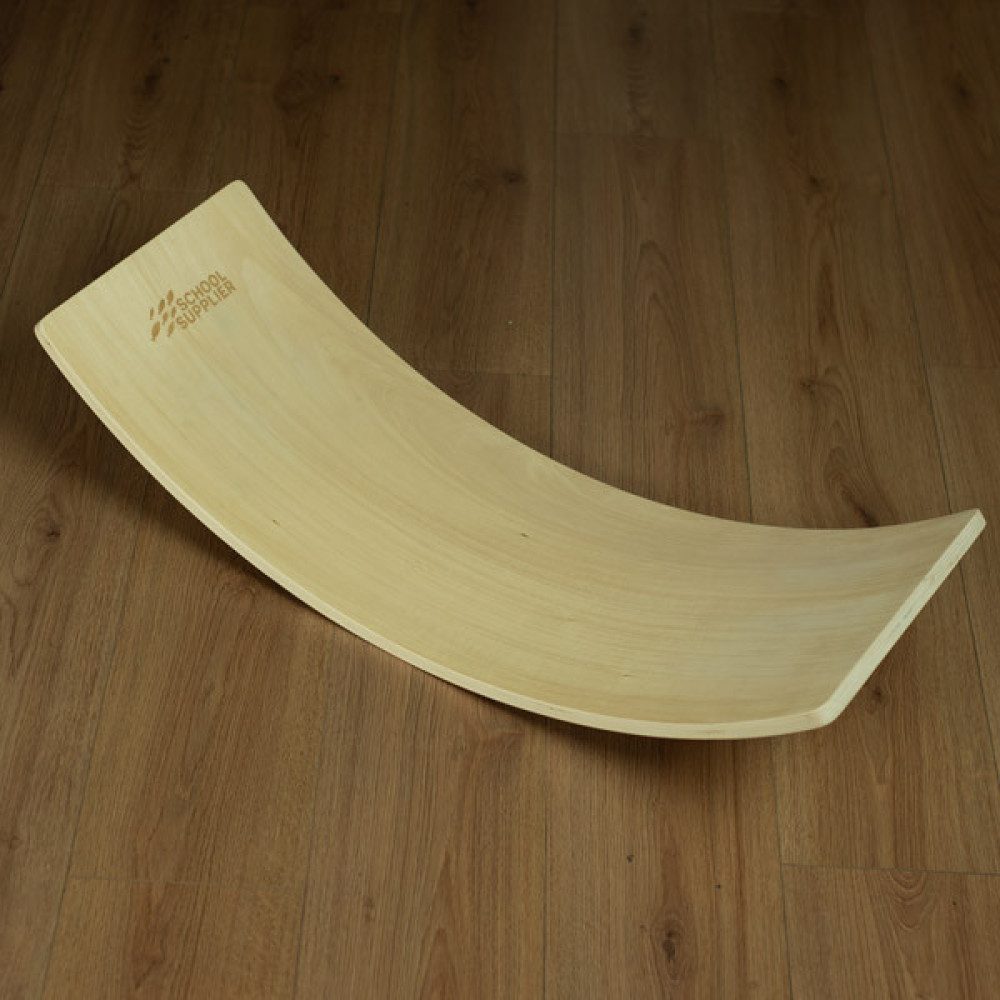
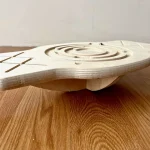
📷 Photo by shop.schoolsupplier.co.uk
Why Static Standing Isn’t Enough
When you stand perfectly still at a desk, your muscles often lock into a rigid pattern. This can lead to postural fatigue, where the spine bears the brunt of your body weight without active muscular support. Over time, the muscles that should be stabilizing your lumbar region become dormant. This is where the balance board changes the physiological equation.
By introducing a tilt or wobble, the board disrupts the static nature of your stance. Your core muscles must fire rhythmically to counteract the movement. This is not about performing high-intensity crunches while you type; it is about sustained, low-level muscle recruitment that improves postural endurance and spinal alignment throughout the workday.
Measuring the Intensity of Abdominal Work
The level of abdominal activation varies depending on the type of balance board you use. While clinical electromyography (EMG) studies are the gold standard for measuring this, you can gauge the effectiveness of your session by monitoring your physical fatigue and posture. A board that offers a higher degree of tilt generally requires more significant engagement from the obliques to prevent you from losing your footing.
| Board Type | Primary Focus | Core Engagement Level |
|---|---|---|
| Wobble Board | General Stability | Moderate |
| Rocker Board | Linear Balance | Low to Moderate |
| Balance Cushion | Deep Stabilizers | High |
| Roller Board | Advanced Core/Proprioception | Very High |
Practical Steps to Integrate Balance Boards Safely
Jumping into a full eight-hour day on a balance board is a recipe for fatigue and potential injury. Your muscles need time to adapt to the new demands of constant stabilization. Follow this progression to safely increase your core activation without overtaxing your lower back.
- Start with 15-minute intervals: Limit your use of the board to 15-minute blocks, alternating with 45 minutes of flat-floor standing to allow your muscles to recover.
- Maintain proper desk height: Ensure your elbows are at a 90-degree angle while on the board; if the board elevates you by a few inches, adjust your desk height accordingly to prevent shoulder strain.
- Engage the core consciously: Periodically check your posture by pulling your navel slightly toward your spine, which helps transition the effort from your lower back to your abdominal wall.
- Listen to your arches: If your feet feel significantly fatigued, step off the board immediately; foot strength is the foundation of core stability, and overworking the feet can lead to poor form.
- Increase duration gradually: Once you can maintain a 15-minute session without significant tremors or exhaustion, increase your time by five-minute increments per week.
Common Mistakes and Risks
One of the most frequent errors users make is “locking” their knees. When you stand on a balance board with locked knees, you transfer the instability directly to your joints rather than allowing your muscles to absorb the movement. Always keep a soft, micro-bend in your knees to ensure the core is doing the heavy lifting.
Another common mistake is neglecting the footwear. Standing on a hard plastic or wooden board in dress shoes or heels is ineffective and potentially dangerous. Use flat-soled athletic shoes or, if comfortable and allowed, perform the exercise in socks to improve proprioception and grip. Finally, avoid using the board during high-stress tasks that require intense focus, as your brain may struggle to balance and concentrate simultaneously, leading to a loss of form.
The Long-Term Impact on Posture
Beyond simple muscle activation, the consistent use of a balance board promotes “active sitting” and “active standing” habits. It retrains the nervous system to remain aware of your center of gravity. Over months, this translates into better posture even when you are not on the board. You will likely find that you are less prone to slouching at your desk because your deep core stabilizers have become more accustomed to holding you upright against gravity.
While the balance board is an excellent tool, it should be viewed as a supplement to, not a replacement for, other forms of exercise. It is a way to bridge the gap between sedentary desk work and active movement, helping to mitigate the negative metabolic effects of prolonged sitting while simultaneously toning the midsection.
Q: Can I use a balance board for the entire workday?
A: It is not recommended to use a balance board for the entire day, as this can lead to muscle fatigue and repetitive strain; aim for short, frequent intervals instead.
Q: Will using a balance board help me lose belly fat?
A: While it increases core muscle activation, it is not a primary fat-loss tool; it is better utilized for improving posture, balance, and core stability.
Q: Should I feel sore after using a balance board?
A: You may feel mild muscle fatigue in your calves and core initially, but sharp pain or severe soreness is a sign that you should decrease your usage and check your form.
📷 Photo by kidodido.com