

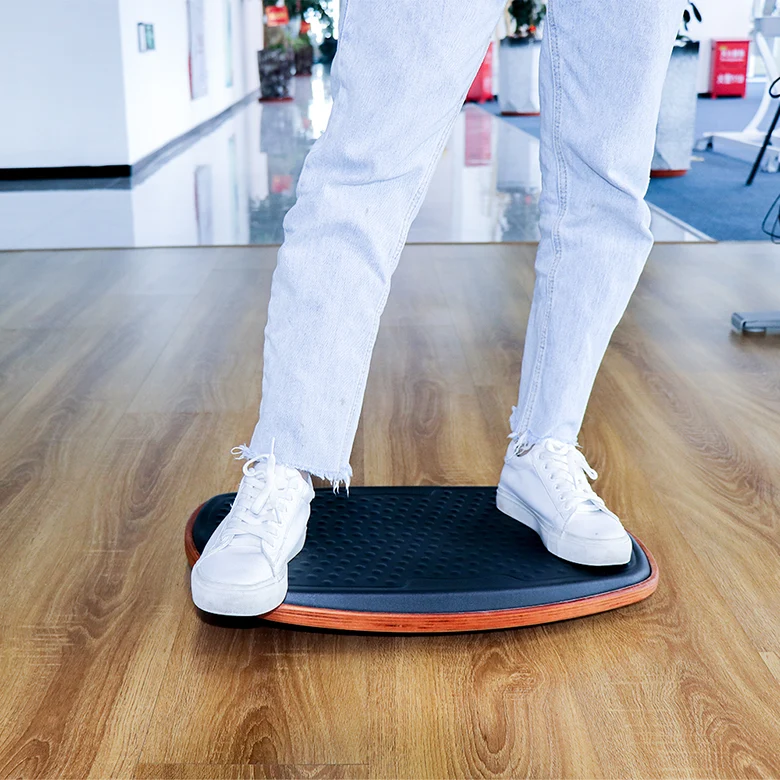
Aploda.com – Anti-fatigue mats are designed to provide cushioning that reduces pressure on joints and muscles during static standing, whereas balance boards promote micro-movements to improve posture and circulation, making the choice dependent on whether you prioritize immediate comfort or long-term musculoskeletal engagement.
Choosing between an anti-fatigue mat and a balance board is a common dilemma for professionals transitioning to standing desks. Both tools aim to mitigate the physical toll of vertical working, but they operate on fundamentally different physiological principles. Understanding these differences is the key to maintaining productivity without sacrificing long-term health.
Understanding Anti-Fatigue Mats
Anti-fatigue mats are engineered from high-density foam or rubber materials that create a slight instability underfoot. This subtle “give” encourages the calf muscles to contract and expand rhythmically, which acts as a pump to return blood from the legs back to the heart. By reducing the stiffness of the floor surface, these mats significantly decrease the pressure exerted on the heels, arches, and lower back.
The primary benefit of a mat is comfort. If you are someone who stands for six to eight hours a day, the mat provides a forgiving layer that prevents the “concrete floor effect.” It is an ideal solution for those who want to stand still but need relief from joint compression and foot fatigue.
The Role of Balance Boards
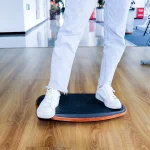
Balance boards, or active standing boards, take a different approach by introducing dynamic instability. These devices require the user to engage their core and stabilizer muscles to maintain equilibrium. Unlike a mat, a balance board turns standing into an active, low-impact exercise session.
The core advantage here is the prevention of static loading. By forcing the body to constantly adjust, balance boards prevent the locking of knees and the slouching posture that often occurs after prolonged standing. However, they can be physically demanding, and for many users, they are not suitable for all-day use without intermittent breaks.
Comparison: Key Differences at a Glance
| Feature | Anti-Fatigue Mat | Balance Board |
|---|---|---|
| Primary Goal | Comfort and cushioning | Muscle engagement and movement |
| Usage Duration | Suitable for all-day standing | Best for intermittent bursts |
| Impact on Posture | Neutral/Supportive | Active/Corrective |
| Learning Curve | None | Short adaptation period |
| Calorie Burn | Negligible | Low to moderate |
How to Choose the Right Tool for Your Workflow
If your workday consists of deep focus tasks, such as writing, coding, or long video meetings, an anti-fatigue mat is likely your best choice. It allows you to stand for long periods without the mental distraction of needing to balance. You can shift your weight naturally without needing to concentrate on your feet.
Conversely, if your work involves frequent task switching or if you find yourself feeling lethargic by mid-afternoon, a balance board can serve as an excellent energy booster. It breaks the monotony of a static posture and keeps your metabolism slightly elevated. Many professionals choose to use both, switching between them throughout the day to keep their bodies guessing.
Common Mistakes When Standing All Day
Regardless of the tool you choose, the biggest mistake is “locking” your joints. When you lock your knees, you impede blood flow and place excessive strain on your spinal discs. Whether you are on a mat or a board, keep your knees slightly soft and micro-flexed.
Another frequent error is improper footwear. Neither a mat nor a board can compensate for poor support in your shoes. Ensure you are wearing footwear with adequate arch support, as the surface beneath you is only half of the equation for foot health.
Steps to Optimize Your Standing Setup
- Evaluate your current fatigue levels to identify if you need comfort (mats) or activation (boards).
- Set your monitor height to eye level to ensure that you are not looking down, regardless of which surface you choose.
- Start with 30-minute intervals if you are using a balance board to allow your stabilizer muscles to build endurance.
- Incorporate a “sit-stand-move” routine where you alternate between sitting, standing on a mat, and using your balance board every 60 to 90 minutes.
- Check your floor surface to ensure the mat or board has enough grip to prevent slipping during use.
Potential Risks of Misuse
While these tools are beneficial, misuse can lead to discomfort. Overusing a balance board without proper core strength can lead to lower back strain. Similarly, using an anti-fatigue mat that is too soft can actually cause instability in the ankles, leading to soreness after long shifts. Always aim for a mat with high-density, high-rebound foam rather than a soft, plush cushion.
Frequently Asked Questions
Q: Can I use a balance board for my entire eight-hour workday?
A: It is generally not recommended. Most users find that balance boards are best used for 15 to 30-minute increments to maintain focus and energy without causing muscle fatigue.
Q: Will an anti-fatigue mat help with my existing lower back pain?
A: Yes, by reducing the impact on your joints and encouraging subtle weight shifts, it can alleviate the pressure that often exacerbates lower back pain during long periods of standing.
Q: Should I wear shoes while using a balance board?
A: It depends on the design, but wearing supportive, flat-soled shoes is usually recommended to provide better stability and grip on the board’s surface.
The decision ultimately comes down to your personal energy levels and the intensity of your work. By listening to your body and rotating between different standing tools, you can create a workspace that supports both your productivity and your physical longevity.
📷 Photo by anthrodesk.ca