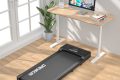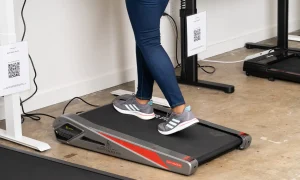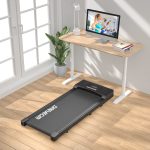

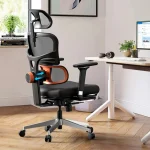
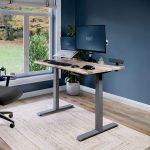
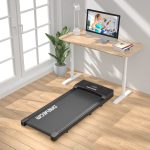


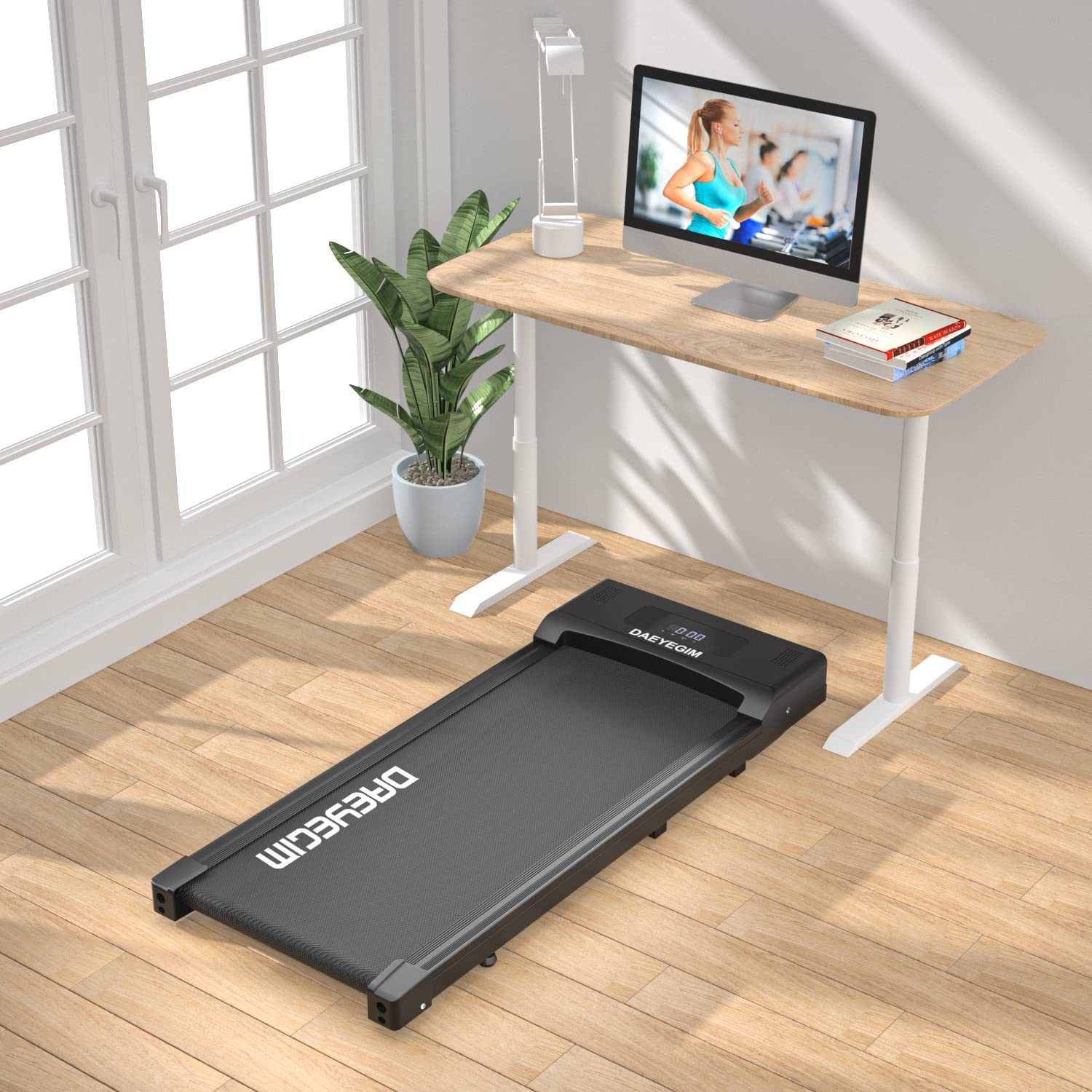
Aploda.com – An under-desk treadmill with incline capabilities improves posture by engaging core muscles and encouraging a more natural, upright spinal alignment during long hours of sedentary work. By introducing a slight gradient, users can naturally counteract the “slumping” effect common at standard desks, ultimately reducing lower back strain and boosting metabolic rate.
The Ergonomic Advantage of Incline Walking
Traditional under-desk treadmills are flat, which can sometimes lead to a repetitive, monotonous gait that fails to activate the posterior chain. When you introduce an incline, your body is forced to adjust its center of gravity. This subtle shift requires you to engage your glutes, hamstrings, and core muscles more intensely than you would on a flat surface. This engagement is the secret to better posture; as your core strengthens, your tendency to slouch over a keyboard decreases significantly.
Beyond posture, incline walking at a low speed—often called “walking pad” sessions—increases the caloric burn without the need for high-intensity impact. For office workers, this means you can transition from a sedentary position to active recovery without breaking a sweat or disrupting your workflow. However, the key is choosing a unit that provides a stable, non-slip surface and a motor quiet enough to avoid disturbing your concentration or colleagues.
Key Considerations When Selecting Your Treadmill
Not all treadmills are built for the office environment. When searching for the best model, focus on the incline mechanism. Some units offer manual incline adjustments, which require you to flip a lever or adjust legs under the deck, while others offer motorized incline. For an under-desk setup, motorized options are superior because they allow you to adjust the intensity without stopping your work or crawling under your desk.
Safety and noise levels are equally critical. Look for models with a high-torque, brushless motor that operates below 50 decibels. A thin, low-profile deck is also essential to ensure you do not hit your knees on the underside of your desk. Always measure your desk height and the height of the treadmill deck before purchasing to ensure you have enough clearance for your legs.
Comparison of Incline Treadmill Features
| Feature | Manual Incline Models | Motorized Incline Models |
|---|---|---|
| Ease of Adjustment | Requires manual effort | Remote or app-controlled |
| Price Range | Budget-friendly | Premium investment |
| Noise Level | Very quiet | Moderate (motor noise) |
| Best For | Consistent, set-it-forget-it | Dynamic, varied workouts |
Steps to Integrate Incline Walking into Your Workflow
Read also: Wooden Balance Board vs Foam Balance Pad for Standing Desks
Adopting a walking desk routine should be a gradual process to avoid fatigue and ensure your workspace remains ergonomic. Follow these steps to maximize your posture benefits while maintaining productivity.
- Assess your workspace height: Ensure your monitor is at eye level so that even when the treadmill is at an incline, you are not looking down and straining your neck.
- Start with a flat baseline: Use the treadmill at 0% incline for the first week to get accustomed to the sensation of walking while typing.
- Introduce a 1-2% incline: Once you are comfortable, increase the incline slightly. This is enough to engage your core without making it difficult to maintain steady typing.
- Implement the 20-20-20 rule: Walk for 20 minutes, take a 20-minute break to sit, and perform 20 seconds of stretching to reset your posture.
- Monitor your footwear: Always wear supportive sneakers with arch support; walking on a treadmill for hours in flat office shoes or socks can lead to foot and ankle pain.
Common Mistakes to Avoid
One of the biggest mistakes users make is setting the incline too high, too soon. A steep incline changes your walking mechanics, which can cause you to lean forward excessively, effectively defeating the purpose of the treadmill. Your goal should be a subtle incline that encourages an upright posture rather than a strenuous climb that leaves you breathless and unable to focus on your tasks.
Another common oversight is ignoring the importance of a desk mat. Even if your treadmill is quiet, the vibration from the motor can travel through the floor. A high-density rubber mat not only absorbs sound but also provides extra cushioning for your joints, making long sessions much more tolerable.
Addressing Potential Risks
While incline walking is generally safe, it is not without risks if done incorrectly. Overuse injuries can occur if you transition from a completely sedentary life to walking three hours a day. Start with 15-minute intervals and listen to your body. If you feel any sharp pain in your shins, knees, or lower back, stop immediately. These are often signs that your walking form has broken down or your incline is set higher than your current fitness level allows.
Also, ensure your power cords are tucked away. An under-desk treadmill creates a web of cables that can become a tripping hazard in a busy home office. Use cable sleeves or clips to secure the power cord to the desk leg, keeping the walking area clear and safe.
Frequently Asked Questions
Q: Can I use an incline treadmill for all-day walking?
A: It is not recommended. Aim for intermittent use, such as 30 to 60 minutes at a time, to avoid muscle fatigue and maintain proper form throughout the day.
Q: Does the incline affect my typing accuracy?
A: It might initially. As you get used to the movement, your body will stabilize. If you find it difficult to type, reduce the speed or incline until your coordination improves.
Q: How do I know if the treadmill fits under my desk?
A: Measure the clearance between the floor and the underside of your desk, then subtract the height of your treadmill deck. You should have at least 6-8 inches of space for your legs and knees.
Final Thoughts on Long-Term Success
Investing in the best under-desk treadmill with incline capabilities is an investment in your long-term health. By prioritizing your posture now, you are preventing the chronic back and neck issues that often plague office professionals. Remember that the goal is not to train for a marathon while working, but to keep your body moving in a way that supports your professional output and your physical well-being. Consistency, coupled with proper form and incremental adjustments, will provide the best results over time.
📷 Photo by snapklik.com