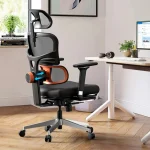



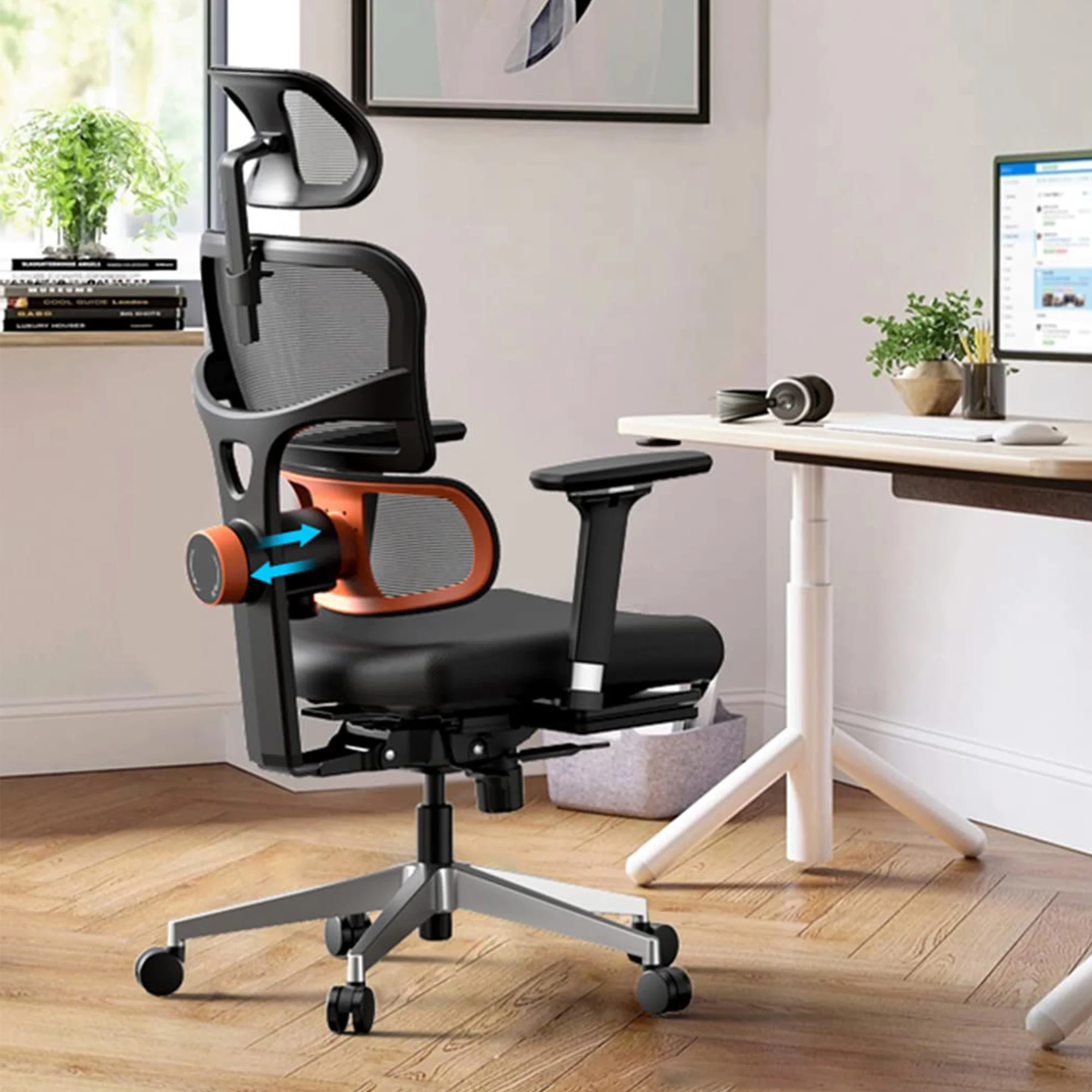
Aploda.com – Synchronous tilt and synchro-tilt mechanisms are advanced ergonomic features that allow the chair’s backrest and seat to recline simultaneously at different ratios, ensuring constant support and proper spinal alignment during movement. While often used interchangeably, these mechanisms represent the gold standard in active sitting by maintaining the user’s feet planted on the floor while the body reclines.
The Core Concept of Active Sitting
Traditional chairs often feature a simple swivel-tilt mechanism where the seat and backrest move as a single rigid unit. This design forces the user to lift their feet off the ground or strain their hamstrings when reclining. Ergonomic chairs utilizing synchronous or synchro-tilt technology solve this by decoupling the movement of the seat and backrest.
When you recline in a chair equipped with these mechanisms, the backrest moves significantly further than the seat. Typically, this is achieved through a specific ratio, such as 2:1 or 3:1. This means for every two or three degrees the backrest reclines, the seat tilts upward by only one degree. This subtle adjustment keeps your hips open, reduces pressure on the underside of your thighs, and keeps your eyes level with your monitor.
Synchronous Tilt vs. Synchro-Tilt: Is There a Difference?
In the world of office furniture manufacturing, the terms “synchronous tilt” and “synchro-tilt” are almost universally synonymous. Both refer to the mechanical linkage that synchronizes the recline of the seat and back. However, the nuance often lies in the engineering sophistication of the specific chair model.
Some premium chairs feature “weight-activated” synchro-tilt, which automatically adjusts the tension based on your body weight, removing the need for manual knobs. Others offer “multi-position lock” capabilities, allowing you to stop the recline at specific angles. While the underlying physics remains the same, the user experience varies depending on the hardware quality and the presence of additional tension controls.
Key Technical Comparison
| Feature | Standard Swivel-Tilt | Synchronous Tilt Mechanism |
|---|---|---|
| Seat Movement | Moves in unison with back | Tilts slightly as back reclines |
| Feet Position | Often lifts off floor | Stays firmly planted |
| Spinal Support | Minimal/Static | Continuous lumbar contact |
| Primary Benefit | Low cost | Reduced fatigue and strain |
Benefits of Synchronous Mechanisms
The primary advantage of these mechanisms is the preservation of the “open angle” between your torso and thighs. When you sit at a 90-degree angle for eight hours, your hip flexors tighten, and your pelvis tends to rotate backward, which flattens the natural curve of your lumbar spine. By using a synchro-tilt chair, you can maintain a more obtuse angle (between 100 and 110 degrees), which is significantly better for long-term spinal health.
Furthermore, these mechanisms encourage “micro-movements.” Static sitting is the enemy of the human back. Because the chair follows your body as you shift your weight, you are more likely to change positions frequently. This constant micro-movement promotes blood circulation in the lower extremities and prevents the stiffening of muscles and ligaments.
How to Properly Adjust Your Synchro-Tilt Chair
Having the mechanism is only half the battle; you must calibrate it to your body to experience the ergonomic benefits. Follow these steps to ensure you are getting the most out of your chair:
- Sit fully back in the chair so your lower back is pressed firmly against the lumbar support.
- Adjust the seat height so your feet are flat on the floor and your knees are at a 90-degree angle.
- Locate the tension control knob, usually found under the front or side of the seat.
- Turn the knob to increase or decrease resistance until the chair supports your weight comfortably without pushing you forward or letting you fall backward too quickly.
- Unlock the recline mechanism and lean back gently to test if the seat-to-back ratio feels natural and fluid.
- If your chair offers a recline lock, select a position that allows you to work while maintaining contact with the backrest at all times.
Common Mistakes and Misconceptions
One common error users make is over-tightening the tension knob. If the tension is too high, the chair feels rigid and effectively negates the purpose of the synchronous movement, forcing you to use your core muscles to push the chair back. Conversely, if it is too loose, you may feel as if you are slipping out of the chair.
Another misconception is that these mechanisms replace the need for lumbar support. While the synchro-tilt helps maintain posture, it does not provide the specific structural support required for the lumbar curve. You should always ensure that your chair has an adjustable lumbar pad in addition to a high-quality tilt mechanism.
Risks of Poorly Engineered Mechanisms
Not all synchronous mechanisms are created equal. Cheaply manufactured chairs often use plastic components or poorly calibrated springs that can lead to “clunkiness” or uneven movement. If a mechanism is not smooth, it can cause the user to develop jerky movements, which can eventually lead to muscle strain or a feeling of instability. Always prioritize chairs from reputable manufacturers who offer warranties on their mechanical components.
Frequently Asked Questions
Q: Does a synchro-tilt chair help with lower back pain?
A: Yes, by allowing the pelvis to tilt naturally and keeping the spine in an ergonomic position, it reduces the pressure on intervertebral discs and minimizes the strain on lower back muscles during long periods of sitting.
Q: Should I keep my synchro-tilt chair locked or unlocked?
A: For optimal health, keep it unlocked. Allowing the chair to follow your movements encourages circulation and dynamic sitting, which is superior to remaining in a single, locked position all day.
Q: How do I know if my chair has a synchronous mechanism?
A: Lean back while sitting in your chair; if the seat rises or tilts upward slightly while the backrest reclines, you have a synchronous mechanism. If the seat stays horizontal while the back tilts, you have a standard tilt mechanism.
Investing in a chair with a quality synchronous tilt mechanism is an investment in your long-term mobility. By understanding how these parts interact, you can fine-tune your workspace to support your health, productivity, and overall comfort throughout the workday.
📷 Photo by eurekaergonomic.com