







Aploda.com – Reclaimed wood tops for electric standing desks require a durable, moisture-resistant sealant like polyurethane or hard-wax oil to prevent warping, paired with gentle, non-abrasive cleaning routines to preserve the wood’s unique patina and structural integrity.
Reclaimed wood brings unmatched character, history, and sustainability to a workspace. However, unlike factory-finished laminate or bamboo tops, salvaged timber has lived a previous life. It may contain old nail holes, deep grain patterns, and varying moisture content. When paired with the mechanical stress of an electric standing desk—which undergoes frequent vibration and height adjustments—the wood requires specific preparation and maintenance to ensure it remains stable and aesthetically pleasing for years.
Why Sealing is Critical for Reclaimed Wood
The primary enemy of any wooden desk top, especially one made from reclaimed lumber, is humidity fluctuation. Reclaimed wood is often acclimated to different environments before being repurposed. When you mount it to a motorized frame, the wood must be sealed to prevent it from absorbing moisture from the air, which leads to cupping, bowing, or splitting. An unsealed top will not only look dull but will also be highly susceptible to spills, oils from your skin, and coffee rings.
Choosing the right sealant depends on the look you want. Polyurethane provides a hard, plastic-like shell that is highly resistant to scratches and liquids, making it ideal for high-traffic offices. Conversely, hard-wax oils, such as Rubio Monocoat or Osmo, penetrate the wood fibers to create a matte, natural finish that feels like real wood. These are easier to spot-repair if the desk gets a scratch, as you can simply sand and re-apply oil to the affected area without refinishing the entire surface.
Comparison of Popular Finishing Options
| Finish Type | Protection Level | Appearance | Maintenance |
|---|---|---|---|
| Polyurethane | High (Waterproof) | Glossy or Satin | Difficult to spot repair |
| Hard-Wax Oil | Medium (Water-resistant) | Matte/Natural | Easy to spot repair |
| Lacquer | High | Smooth/Reflective | Requires professional equipment |
Steps to Properly Seal Your Reclaimed Desk Top
Achieving a professional-grade finish on a reclaimed top is a manageable DIY project if you follow a methodical process. Ensure your workspace is dust-free and well-ventilated before you begin.
- Sand the wood surface systematically, starting with a coarse grit (80-100) to remove splinters or old residue, and finishing with a fine grit (180-220) to ensure a smooth, uniform texture.
- Remove all dust particles thoroughly using a vacuum followed by a microfiber tack cloth; any leftover dust will create bumps in your final finish.
- Apply your chosen sealant—whether it is a wipe-on polyurethane or a hard-wax oil—following the grain of the wood to ensure deep penetration.
- Allow the first coat to cure according to the manufacturer’s instructions, which typically ranges from 4 to 24 hours depending on the product.
- Lightly sand the surface with high-grit sandpaper (320-400) to smooth out any raised grain, wipe clean, and apply a final topcoat for maximum durability.
Cleaning and Maintenance Best Practices
Once your desk is sealed, daily maintenance is straightforward, but you must avoid harsh chemicals. Reclaimed wood often has deep fissures or knots where debris can collect. Using a vacuum with a soft brush attachment is the safest way to clear out dust from these character marks. For daily wiping, use a slightly damp, soft cloth. Avoid soaking the wood, as standing water can penetrate even the best sealant if left long enough.
Avoid generic household cleaners that contain bleach, ammonia, or silicone-based polishes. These chemicals can break down the finish over time or leave a sticky residue that attracts more dust. If you use a hard-wax oil finish, consider using the brand-specific soap recommended by the manufacturer, as these are formulated to clean the surface while replenishing the protective properties of the wax.
Common Mistakes to Avoid
One of the most frequent errors is failing to seal the underside of the desk. When you seal only the top, the wood will absorb moisture unevenly, causing it to cup or warp toward the side that is not protected. Always apply at least one to two coats of sealant to the bottom of the slab to balance the wood’s tension. Another mistake is ignoring the mounting points. When installing the top onto the electric frame, ensure you use slotted holes or Z-fasteners that allow the wood to expand and contract slightly with seasonal changes without cracking the desk frame or the wood itself.
Temperature control is also vital. Avoid placing your electric desk directly in front of a heater or air conditioning vent. Constant, direct blasts of hot or cold air can dry out the wood fibers prematurely, leading to cracks that are difficult to repair. If your reclaimed wood shows signs of drying out—such as a loss of luster or a rough texture—it is time to lightly re-oil the surface.
Practical Tips for Longevity
To keep the desk looking pristine, always use coasters for beverages. Even if your finish is water-resistant, prolonged exposure to cold condensation or hot mugs can create rings or cloud the finish. If you work with heavy equipment, consider using a large desk mat. A high-quality desk mat acts as a buffer, absorbing the impact of heavy typing or moving equipment, and prevents the finish from wearing thin in the specific area where your mouse or keyboard sits.
Frequently Asked Questions
Q: Can I use a reclaimed wooden door as a standing desk top?
A: Yes, but you must ensure the door is solid wood and not hollow-core. You will need to trim it to size, sand it extensively, and apply multiple coats of sealer, as doors are rarely finished to withstand the daily friction of a desk surface.
Q: How often should I re-apply the finish to my desk?
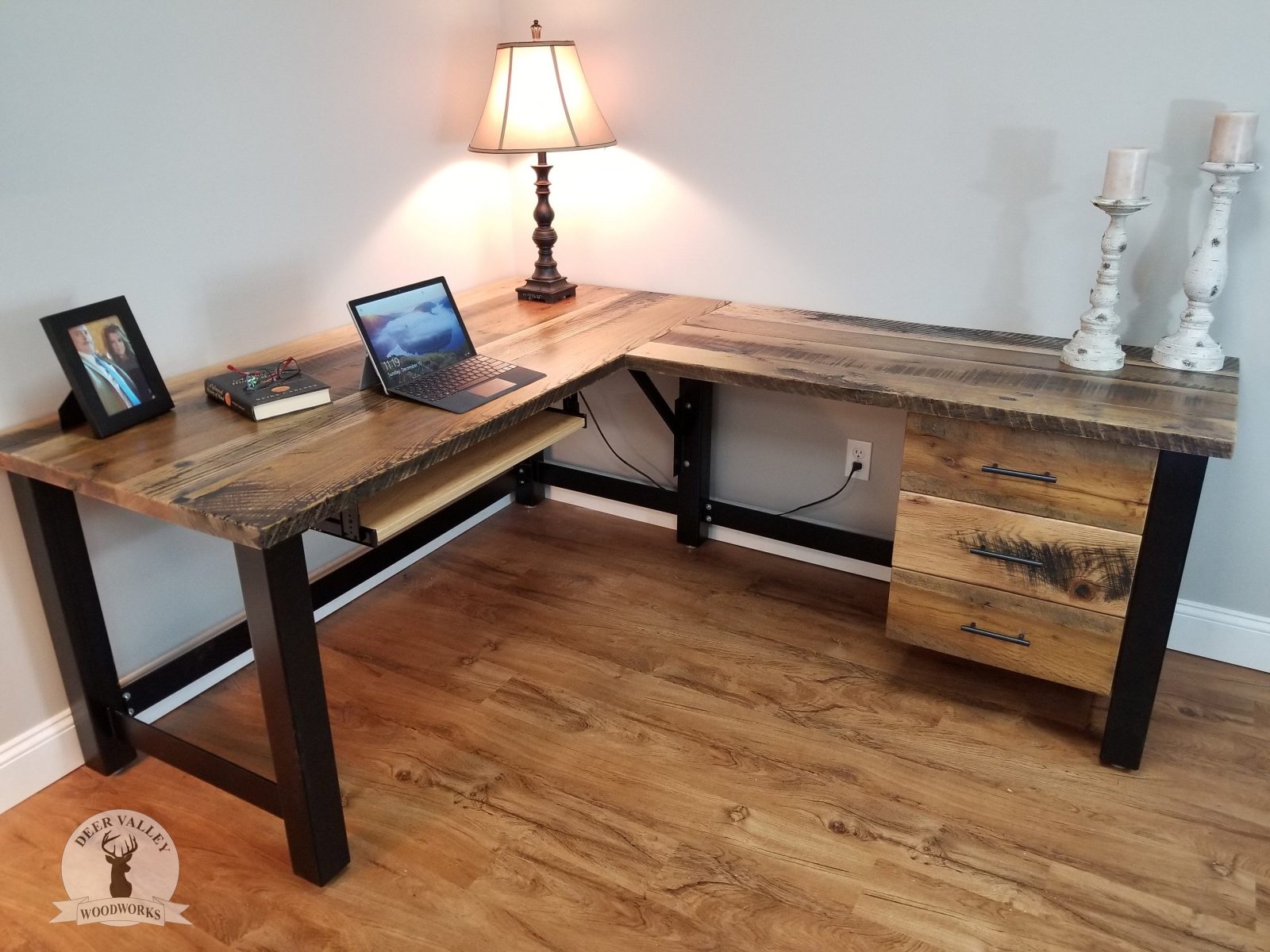
📷 Photo by etsy.com
A: For hard-wax oils, a light maintenance coat every 12 to 18 months is usually sufficient. Polyurethane finishes are more durable and may not need re-application for several years, depending on the intensity of your daily use.
Q: Will my desk continue to move after it is installed?
A: Wood is a hygroscopic material, meaning it breathes. Even after sealing, it will slightly expand and contract with the humidity of your room. Using proper mounting hardware that allows for this movement is essential to prevent structural damage.
By respecting the nature of reclaimed wood and adhering to a consistent maintenance schedule, you can enjoy a workspace that is not only functional and ergonomic but also a stunning piece of history in your home or office. Proper sealing and cleaning are the small investments that protect the long-term value of your unique furniture piece.
📷 Photo by walmart.com