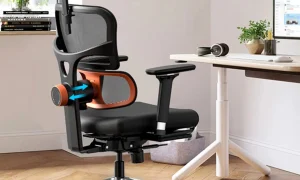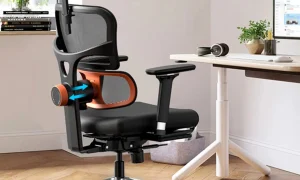
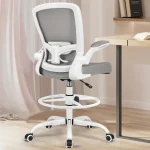


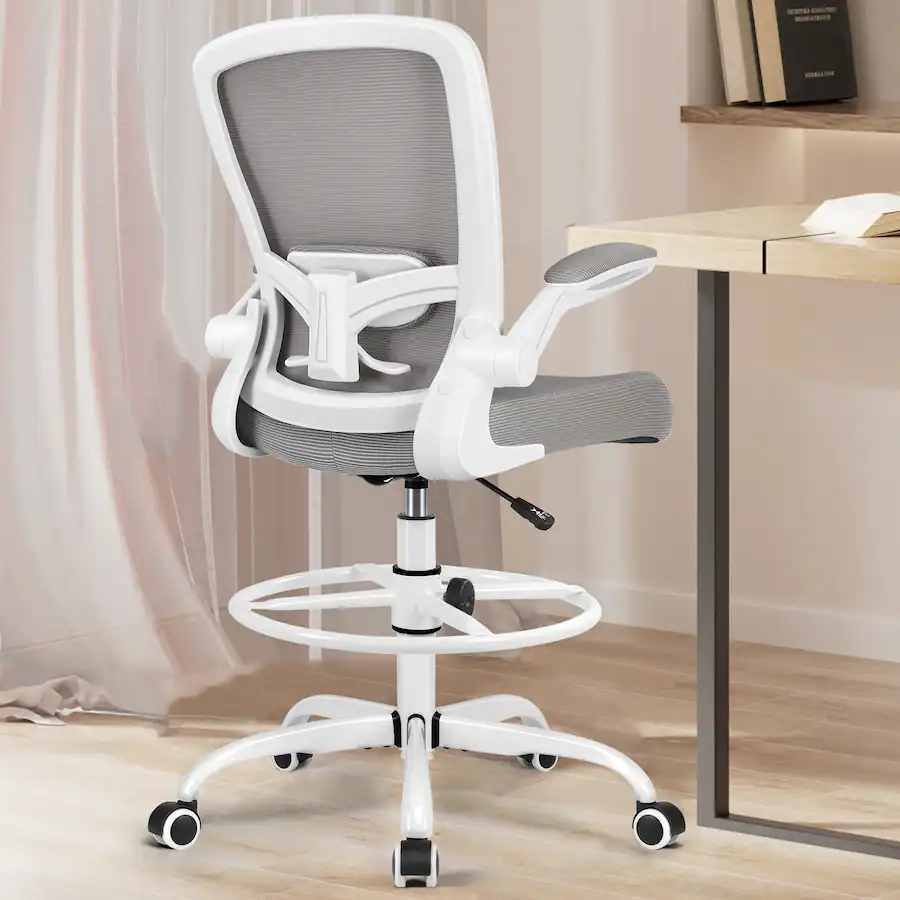
Aploda.com – An ergonomic drafting chair for a standing height desk requires a foot ring positioned exactly where your feet rest naturally to maintain a 90-degree angle at the knees and prevent lower limb circulation issues. Proper adjustment of this component is the primary factor in neutralizing the physical strain caused by elevated seating.
The Mechanics of Drafting Chair Ergonomics
When working at a standing height desk, your feet often dangle if you use a standard office chair, which creates pressure on the back of your thighs. This pressure restricts blood flow and forces your lower back to compensate for a lack of support. A drafting chair is specifically designed to bridge this gap, but the foot ring is not merely a place to rest your heels; it is a critical structural element that stabilizes your core.
The human body is not designed to sit with the feet unsupported for long durations. By using a foot ring, you effectively replicate the stability of the floor while seated at an elevated height. This setup allows your hips to remain open and your spine to maintain its natural lumbar curve, which is the cornerstone of ergonomic health in a high-desk environment.
Determining the Optimal Foot Ring Height
Finding the “sweet spot” for your foot ring involves a simple physical assessment. You should aim for a position where your thighs are parallel to the floor, or slightly tilted downward, while your feet rest flat on the ring. If the ring is too high, your knees will be forced toward your chest, compressing your abdomen and creating an uncomfortable, cramped sensation. If the ring is too low, you will find yourself sliding forward or dangling your toes, which defeats the purpose of the support.
Step-by-Step Guide to Perfecting Your Setup
- Adjust your seat height first so that your elbows are level with the surface of your standing desk.
- Sit back firmly into the chair, ensuring your lower back is pressed against the lumbar support.
- Loosen the locking knob or mechanism on your foot ring, usually located beneath the ring itself.
- Slide the ring to a level where your knees form a comfortable 90 to 100-degree angle.
- Place your feet flat on the ring, ensuring your entire sole is supported rather than just your toes.
- Tighten the locking mechanism securely to prevent the ring from slipping under your weight during the day.
- Re-evaluate your posture after 30 minutes; if you feel tension in your calves or lower back, adjust the ring height by small increments.
Common Mistakes and How to Avoid Them
One of the most frequent errors users make is treating the foot ring as a variable that stays static regardless of their shoe choice. If you switch between thick-soled sneakers and thin slippers, your foot position will change by nearly an inch. It is common practice to set the ring based on your most frequently worn footwear to maintain consistent spinal alignment.
Another mistake is failing to secure the locking mechanism tightly. Over time, the constant pressure of your feet can cause the ring to drift downward. Make it a habit to check the tightness of the ring once a week as part of your workstation maintenance. Additionally, avoid wrapping your feet around the chair base or the ring poles, as this encourages a twisted, asymmetrical posture that can lead to hip misalignment.
Comparison of Foot Support Methods
| Support Method | Ergonomic Benefit | Best For |
|---|---|---|
| Integrated Foot Ring | High stability, adjustable, keeps posture centered. | Long-duration drafting and design work. |
| Independent Footrest | Portable, can be angled. | Users who switch between multiple chairs. |
| No Foot Support | None (High risk of circulation issues). | Not recommended for standing desks. |
The Impact of Material and Surface Texture
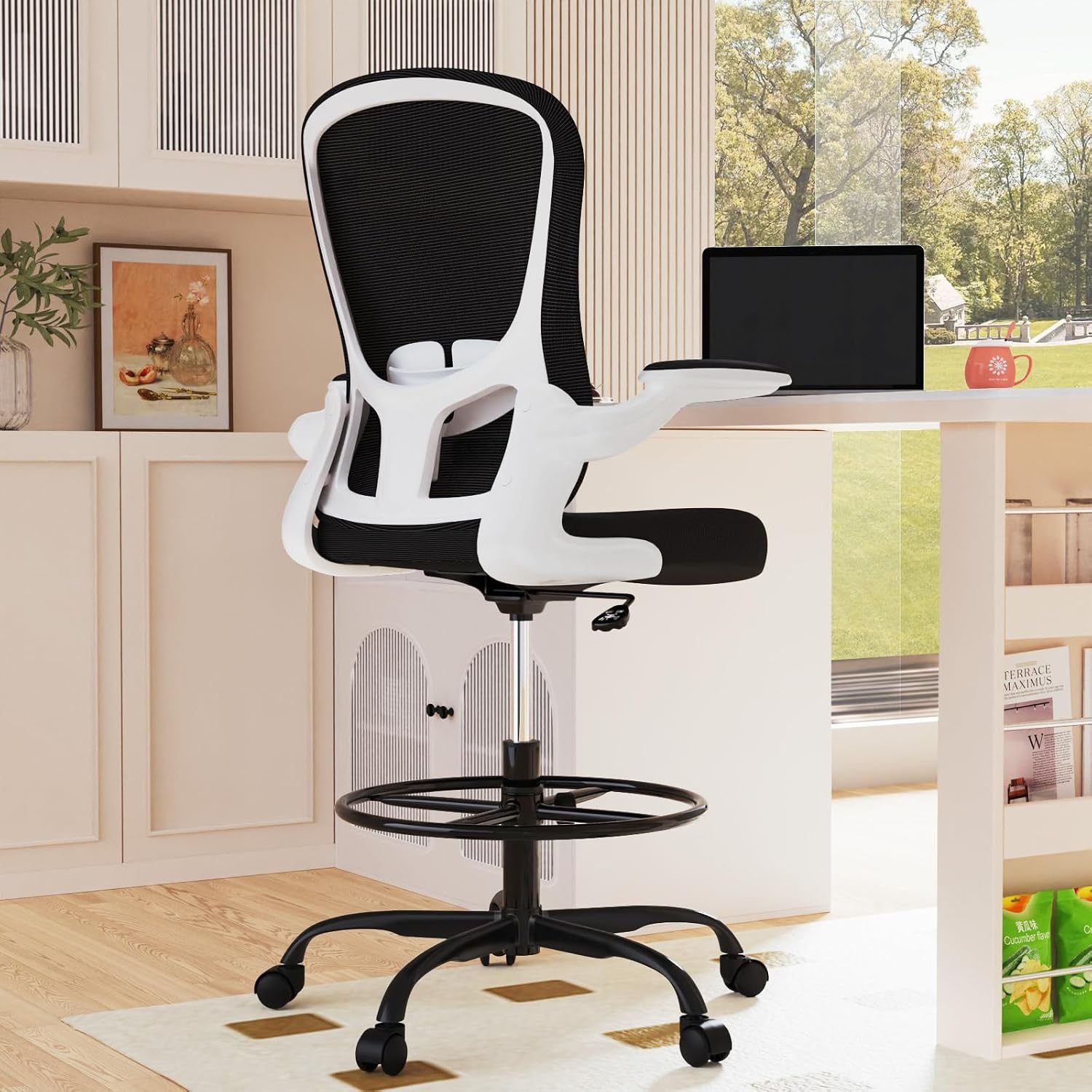
The texture of the foot ring matters more than most realize. A smooth, metallic ring can cause your feet to slip during long sessions, forcing you to use your leg muscles to stay in place, which leads to fatigue. Many professionals prefer a rubberized or textured surface on the ring, or they apply anti-slip tape. This simple modification allows you to rest your weight fully onto the ring without the subconscious effort of “gripping” the metal with your feet.
📷 Photo by ubuy.com.ph
Long-Term Health Risks of Improper Setup
Ignoring the proper setup of your drafting chair can lead to chronic issues. The most immediate risk is venous insufficiency, where blood pools in the lower legs because the veins are compressed by the chair edge. Over months, this manifests as swollen ankles, spider veins, and persistent leg fatigue. Furthermore, a chair that lacks proper foot support forces you to slouch forward to reach your desk, which shifts your center of gravity and places immense strain on the cervical spine.
Frequently Asked Questions
Q: Should my feet be flat on the ring or should I rest my heels?
A: Ideally, your entire foot should be flat on the ring to distribute weight evenly and prevent pressure points on your arches or heels.
Q: Can I use a foot ring if I am very tall?
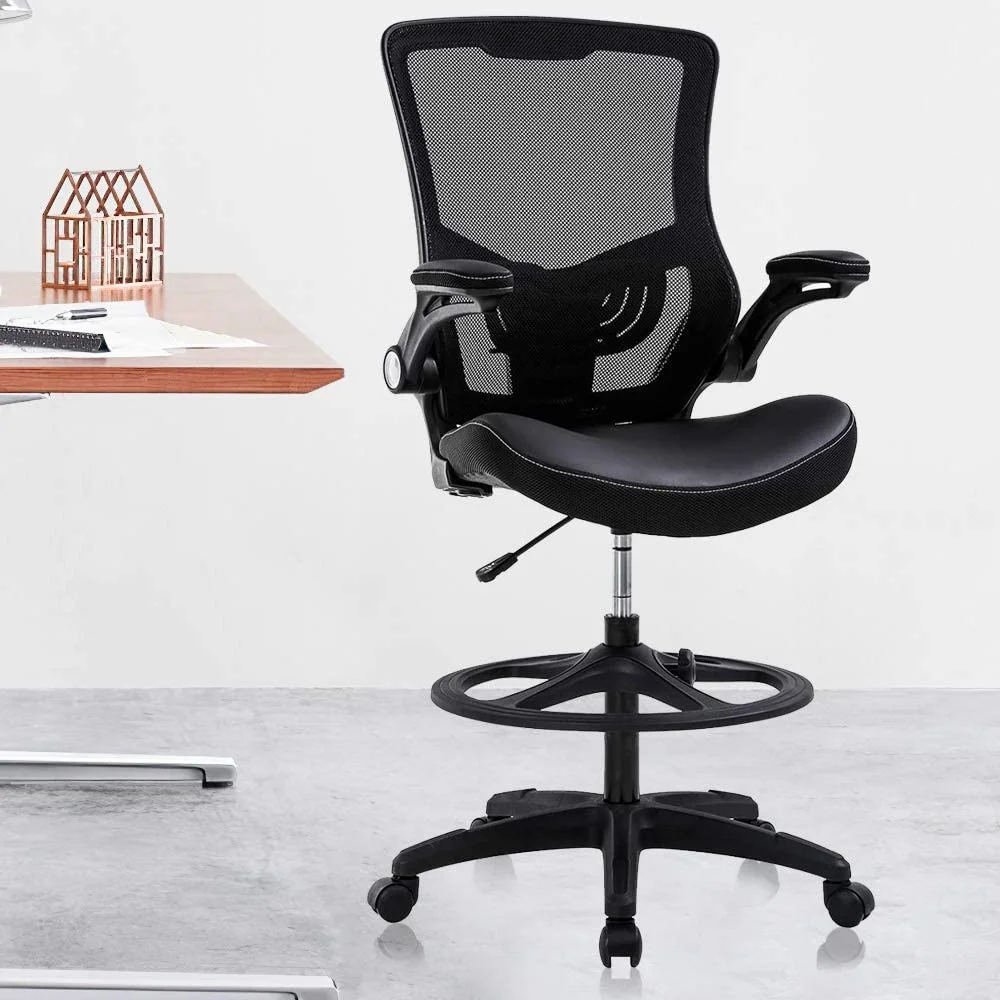
A: Yes, but you must ensure the chair’s cylinder length is sufficient. If the ring is too low for your long legs, you may need a drafting chair with a higher base extension to maintain the correct knee angle.
📷 Photo by walmart.com
Q: How often should I adjust the foot ring?
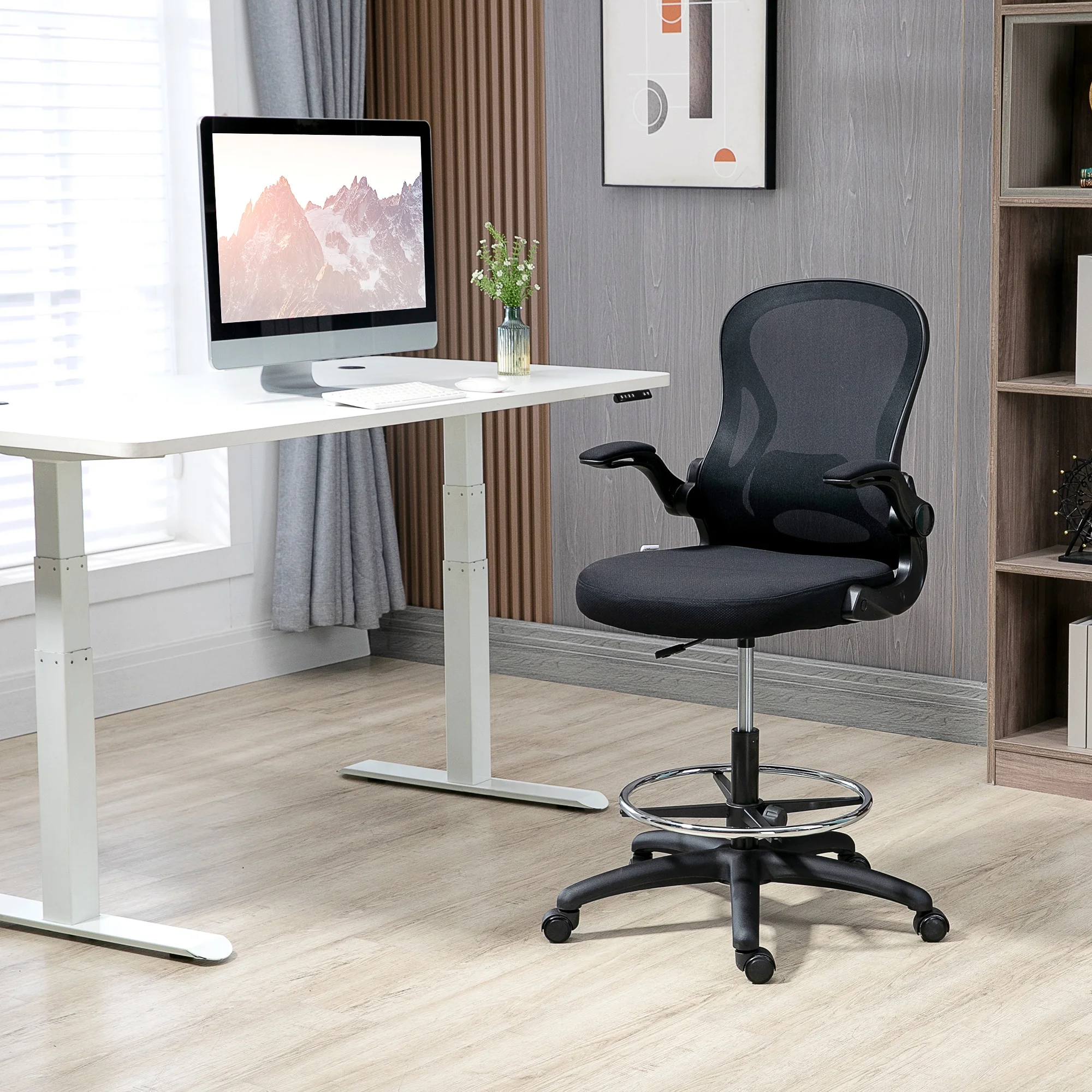
A: You should only adjust it if you change your footwear significantly or if you notice your posture shifting. Once the optimal height is found, it should remain a consistent part of your ergonomic workstation.
📷 Photo by walmart.com
Final Considerations for Daily Use
Consistency is the key to reaping the benefits of an ergonomic drafting chair. When you first set up your chair, it may feel different from what your body is used to. Give yourself a few days to adjust to the new support levels. If you find yourself consistently kicking the ring out of the way, it is a clear indicator that the height is incorrect. Listen to your body; if your feet feel energized and your back feels supported at the end of an eight-hour shift, your foot ring is perfectly positioned.
📷 Photo by bestbuy.com