




Aploda.com – Gas spring mechanisms offer effortless, one-touch height adjustment with a smooth gliding motion, whereas scissor mechanisms provide a more stable, heavy-duty support structure that often requires manual force or crank-based operation.
Choosing the right standing desk converter is a pivotal decision for your ergonomic workspace. While both gas spring and scissor mechanisms aim to transition your workstation from seated to standing, they operate on fundamentally different mechanical principles that impact your daily productivity, physical effort, and long-term durability.
Understanding Gas Spring Mechanisms
The gas spring mechanism functions similarly to the lift system found in high-end office chairs. It utilizes a pressurized cylinder filled with nitrogen gas to counteract the weight of your monitors and peripherals. When you release the locking lever, the internal pressure pushes the platform upward, making the transition nearly weightless for the user.
This system is favored by professionals who frequently switch between sitting and standing throughout the day. Because the mechanism does the heavy lifting, you can adjust your desk height with a single hand, allowing for seamless transitions without disrupting your workflow or causing strain on your wrists and shoulders.
The Mechanics of Scissor Lifts
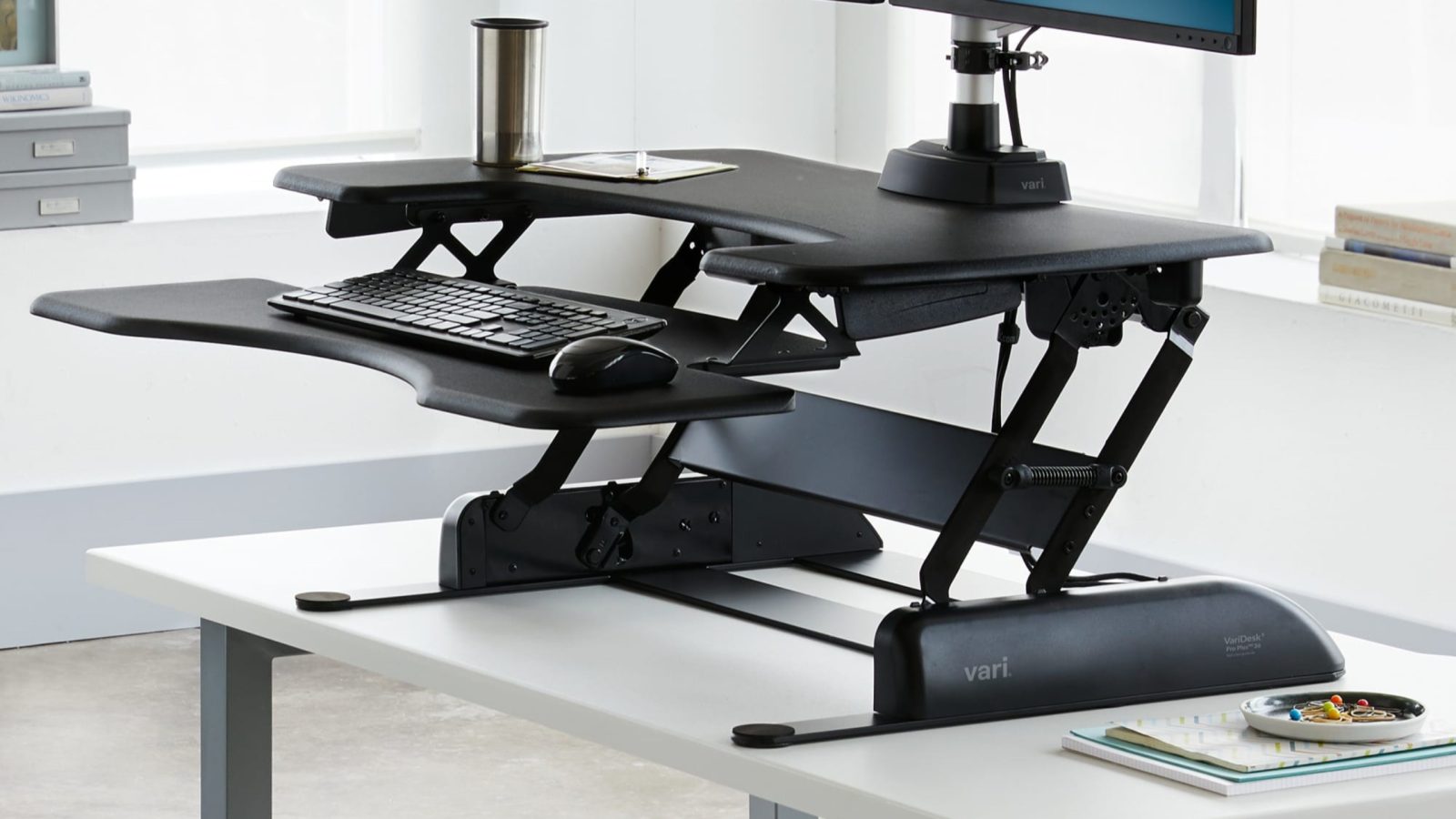
Scissor mechanisms rely on a crisscrossing structural framework that expands or collapses as you apply force. These converters are often engineered for stability and high load-bearing capacities. Unlike gas springs, which can sometimes feel “bouncy” or require precise counterbalancing, a scissor lift provides a rigid, lock-in-place feeling that many power users prefer.
However, the trade-off is the physical effort required. Many manual scissor converters require you to pull or push the platform into place, which can be cumbersome if you have multiple heavy monitors or a high-end mechanical keyboard setup. Some premium scissor models include a crank handle or a secondary spring-assist to mitigate this, but they rarely match the fluid, instantaneous movement of a gas spring system.
Comparative Overview: Key Performance Metrics
| Feature | Gas Spring Mechanism | Scissor Mechanism |
|---|---|---|
| Ease of Use | Excellent (One-touch) | Moderate (Requires effort) |
| Stability | Good (May have minor bounce) | Superior (Rigid structure) |
| Speed of Transition | Instantaneous | Controlled/Slow |
| Maintenance | Higher (Seal wear over time) | Lower (Mechanical longevity) |
| Weight Capacity | Limited by gas pressure | High (Frame-dependent) |
How to Choose Based on Your Workflow
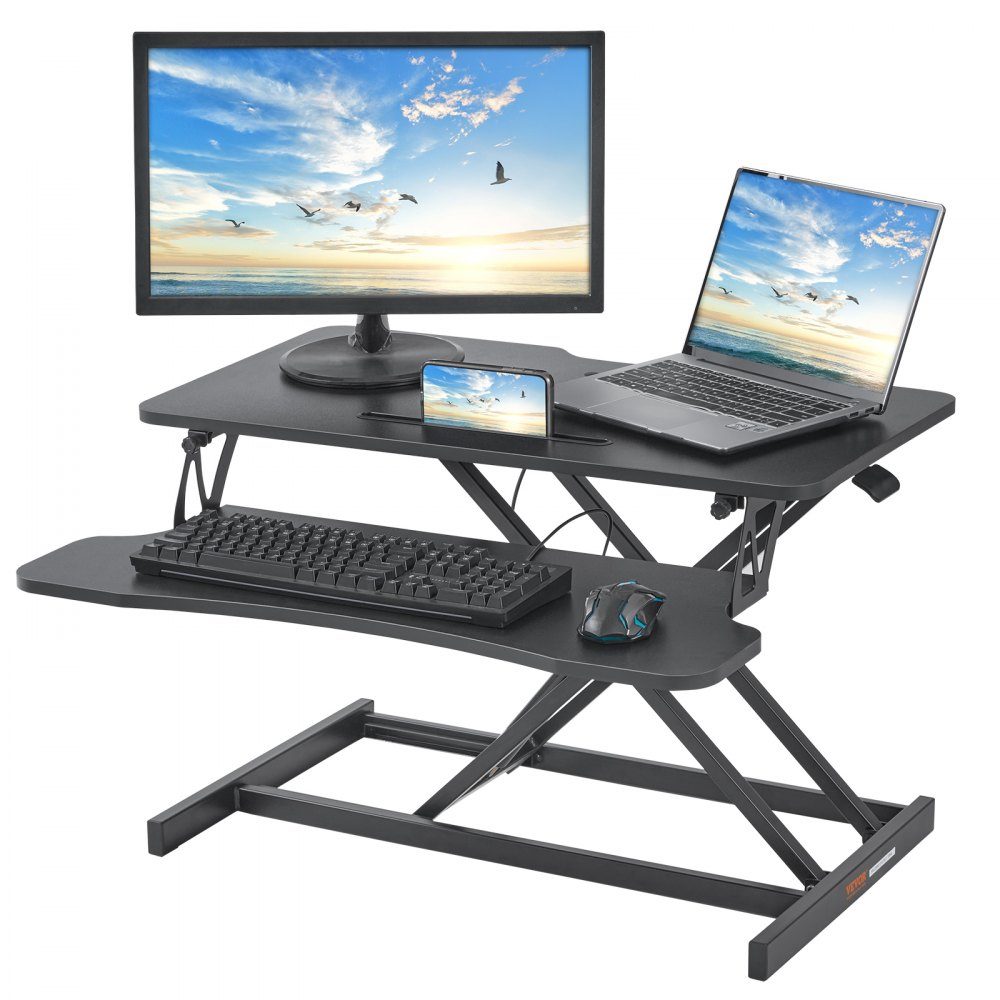
To determine which mechanism fits your needs, consider how you interact with your desk. If you suffer from repetitive strain injuries or prefer to change positions every hour, the gas spring is objectively better for your health. The ease of transition removes the “barrier to entry” for standing, ensuring you actually use the feature you paid for.
📷 Photo by vevor.ca
Conversely, if you are a creative professional or a gamer who requires a rock-solid surface for drawing, precision clicking, or heavy typing, the scissor mechanism is the superior choice. The lack of movement when the desk is locked prevents the slight screen shake that can occur with gas-assisted platforms when typing aggressively.
Step-by-Step Guide to Adjusting Your Converter
Regardless of the mechanism you choose, proper adjustment is vital for ergonomic safety. Follow these steps to ensure your setup is optimal:
- Clear your desk surface of any loose items to prevent them from sliding or falling during the transition.
- Unlock the primary safety lever or turn the adjustment crank slowly to test the resistance of the platform.
- Adjust the monitor height independently of the keyboard tray to ensure the top third of your screen is at eye level.
- Perform a “stability test” by placing your hands on the edge of the desk; if the mechanism wobbles, tighten the tension screws (if applicable) or redistribute the weight of your equipment toward the center of the base.
- Lock the mechanism firmly in place once you reach your desired height to prevent accidental lowering.
Common Pitfalls and Maintenance Tips
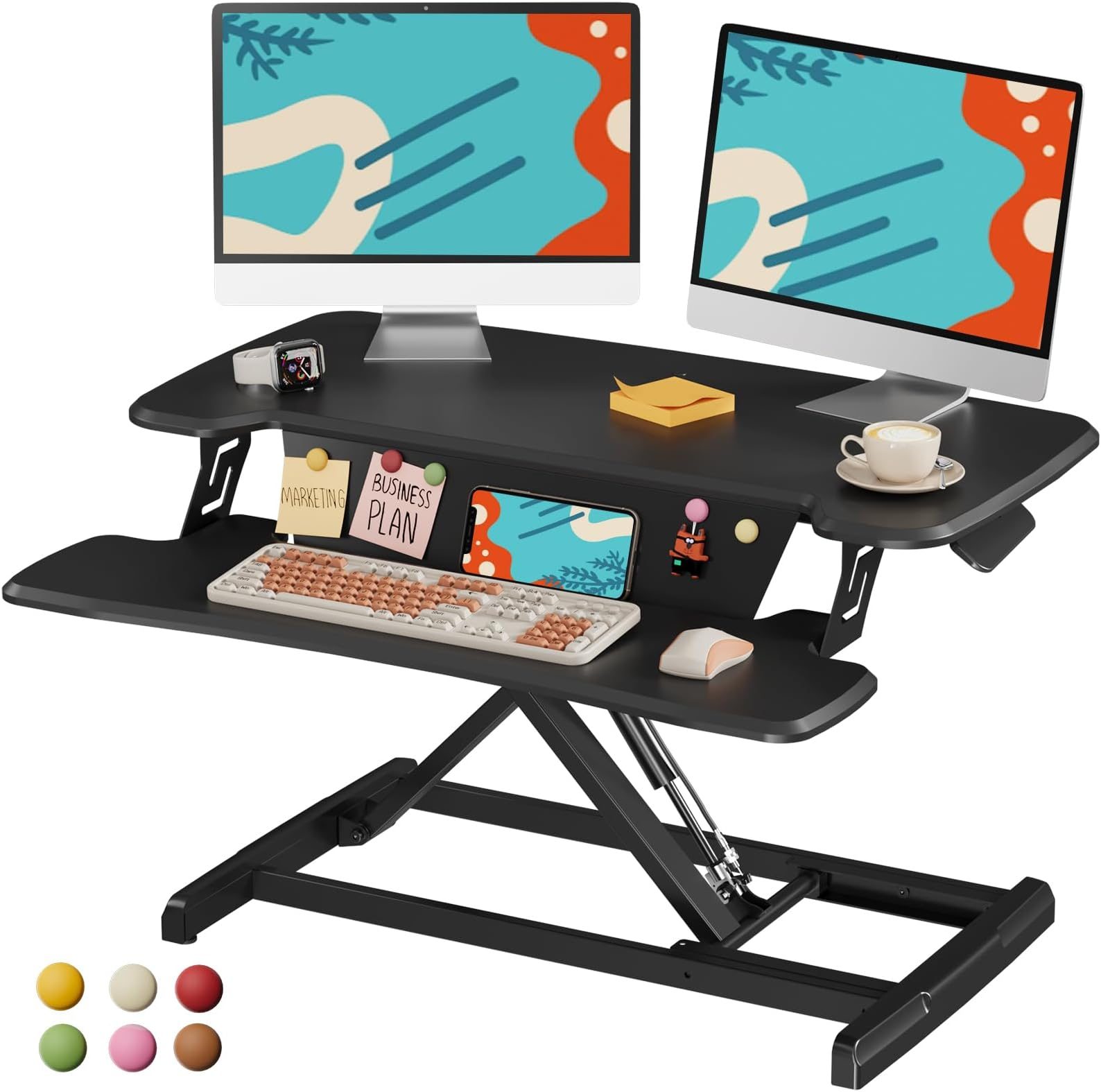
One of the most frequent mistakes users make is overloading their converter. Every model has a maximum weight limit, and exceeding it can cause gas springs to lose pressure prematurely or scissor frames to bend. Always weigh your monitor, monitor arm, and accessories before mounting them.
📷 Photo by amazon.com
Read also: How to Clean and Maintain a Mesh Ergonomic Office Chair
📷 Photo by manuals.plus
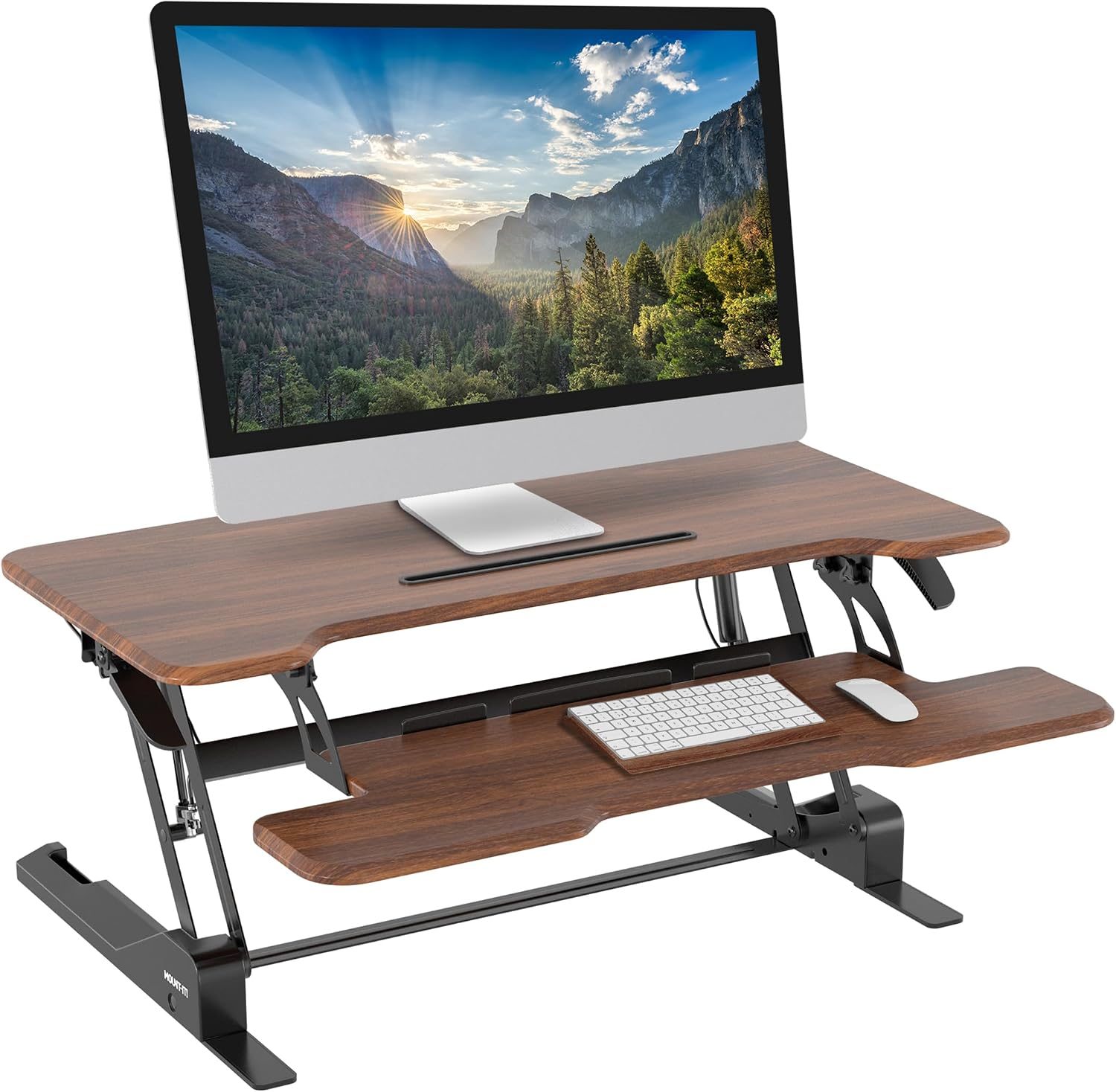
Maintenance is also crucial. For gas spring units, occasionally wipe the support column with a soft cloth to remove dust that could damage the internal seals. For scissor mechanisms, apply a light lubricant to the pivot points once every six months to ensure the metal components do not rust or squeak during operation. If you notice the platform drifting downward while locked, this is a clear sign that the gas cylinder is failing and may need replacement.
Ergonomic Risks of Improper Setup
Failing to transition your desk correctly can lead to significant musculoskeletal issues. If your desk is too high, you will experience shoulder tension and neck strain from reaching upward. If it is too low, you will hunch over, leading to lower back pain. Always prioritize the “90-degree rule,” where your elbows form a right angle when your hands are on the keyboard, regardless of whether you are standing or sitting.
Q: Can I repair a gas spring if it stops lifting?
A: Generally, no. Gas springs are sealed, pressurized units. If they lose pressure, the entire cylinder assembly usually needs to be replaced by the manufacturer.
Q: Why does my scissor desk feel harder to lift over time?
A: This is usually due to friction buildup in the pivot points. Cleaning the joints and applying a silicone-based lubricant will often restore smooth operation.
Q: Which mechanism is better for dual-monitor setups?
A: A heavy-duty scissor mechanism is typically more stable for dual-monitor setups, provided the total weight remains within the manufacturer’s specified limit.
By understanding these mechanical differences, you can invest in a tool that supports your physical well-being rather than becoming another piece of clutter in your office. Choose gas springs for speed and frequency of movement, or opt for scissor mechanisms for structural rigidity and heavy-duty stability.
📷 Photo by detroitchinatown.org