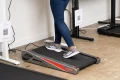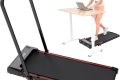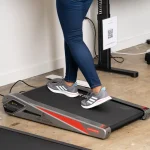



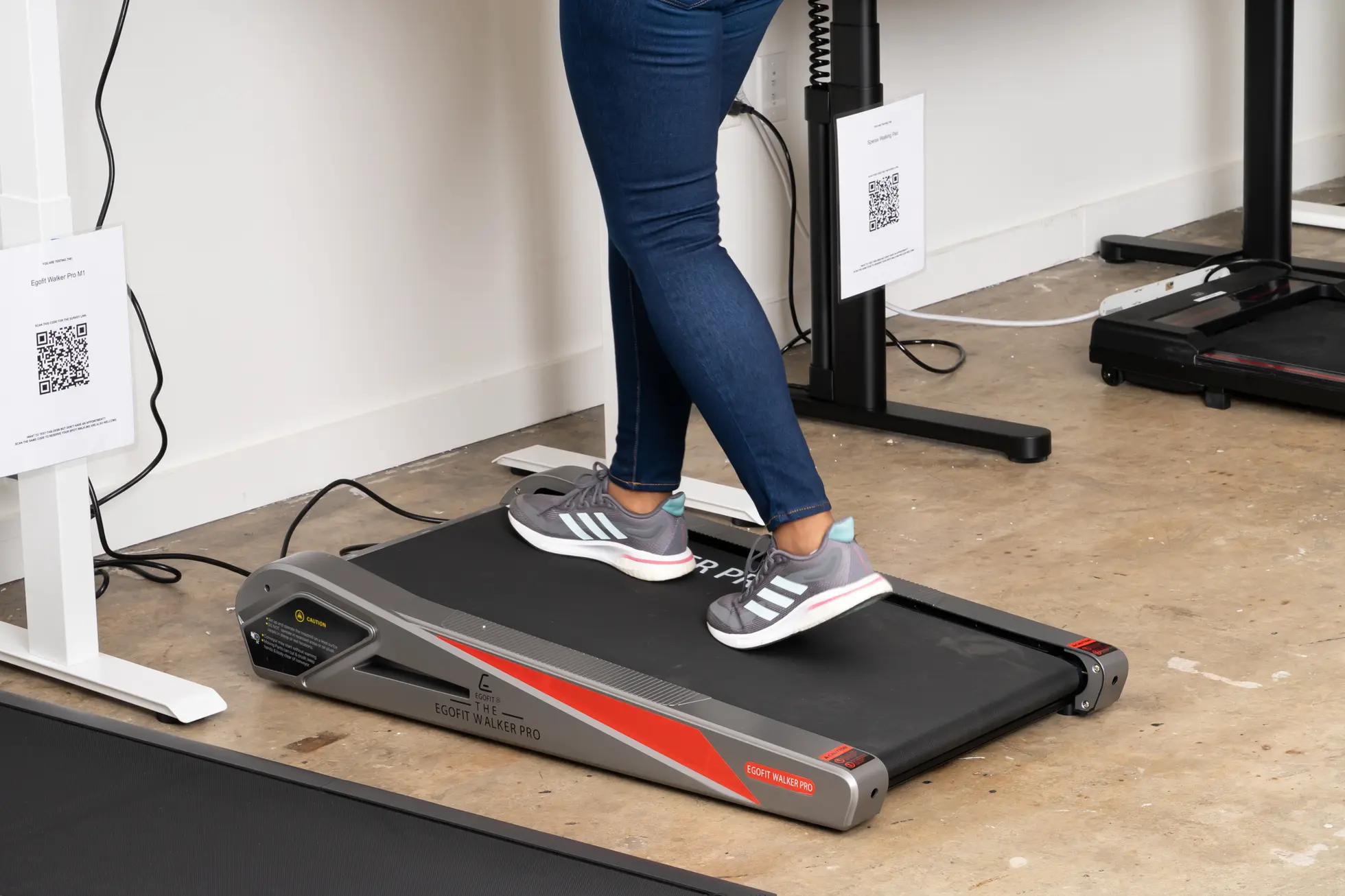
Aploda.com – Under desk treadmills generally feature shorter running decks that can restrict natural movement for users over six feet tall, often requiring a minimum belt length of 45 to 50 inches to accommodate a full walking stride.
The compact design of under desk treadmills is their greatest asset for office productivity, but it is also their most significant limitation for taller individuals. When you walk, your gait length—the distance between successive heel strikes—typically increases with your height. Standard under desk units are often built with a focus on space-saving footprints, frequently capping their belt lengths at 40 to 42 inches. For someone with long legs, this creates a psychological and physical barrier where the user constantly fears stepping off the back of the belt.
The Mechanics of Stride Length
Stride length is not merely about how tall you are; it is about how you move. Even at a leisurely walking pace of 2.0 to 2.5 miles per hour, your natural stride extends further than it would if you were merely shuffling in place. When a treadmill deck is too short, you are forced to consciously shorten your stride to remain within the safety zone of the belt. This “short-stepping” can disrupt your natural biomechanics, potentially leading to discomfort in the hips, lower back, and ankles over extended periods of use.
Most manufacturers design these devices for the average user, which often excludes those who stand over 6’1″. If you are a tall user, you might find yourself walking with a “tucked” posture, where your feet land closer to your center of gravity than they naturally would on a gym-grade treadmill. Over time, this compensatory movement pattern can negate the ergonomic benefits of using a standing desk in the first place.
Evaluating Your Needs: Deck Length Comparison
To determine if a specific model fits your frame, you must look beyond the total footprint of the machine. The “usable” belt length is the metric that matters most. Below is a breakdown of how different deck lengths generally correlate to user comfort levels.
| Deck Length | Recommended User Height | Best Use Case |
|---|---|---|
| 40 Inches | Under 5’7″ | Compact spaces, light walking only. |
| 45 Inches | 5’7″ to 6’0″ | General office use, standard walking pace. |
| 50+ Inches | Over 6’0″ | Tall users, faster walking, natural gait. |
| Foldable Designs | Variable | Requires checking for “dead zones” at joints. |
Risks of Using Undersized Equipment
Ignoring the limitations of your treadmill deck poses more than just a minor inconvenience. The most immediate risk is safety. If your foot consistently strikes the rear plastic motor cover or the end cap of the treadmill, you risk tripping or losing your balance. This is particularly dangerous if you are focused on a computer monitor and not looking down at your feet.
Furthermore, persistent gait compensation can lead to repetitive strain. If you are forced to walk with a shortened stride, your hip flexors may become tight, and your glutes may not engage properly. This essentially creates a “desk-bound” posture while you are theoretically moving. If you notice yourself looking down at your feet every few seconds to ensure you are centered, your treadmill deck is likely too short for your natural stride.
How to Test Your Required Stride
Before investing in an under desk treadmill, you should conduct a simple physical test to understand your specific requirements. You do not need the treadmill to perform this assessment.
- Find a clear, flat space on your office floor and place a piece of painter’s tape on the ground.
- Start walking at a comfortable, brisk pace as if you are on a treadmill.
- Have a colleague mark where your heel lands on the floor for several consecutive steps.
- Measure the distance from the back of your trailing foot to the front of your leading foot.
- Add at least 5-8 inches to this measurement to account for the “safety buffer” required on a moving belt.
- Compare this total number against the technical specifications of the treadmill models you are considering.
Tips for Tall Users
If you have already purchased a treadmill that feels slightly short, there are ways to mitigate the discomfort. First, keep your walking speed moderate. The faster you walk, the longer your stride naturally becomes; by keeping the speed low, you minimize the risk of overstepping the belt. Second, ensure that the treadmill is positioned correctly relative to your desk. Some users place the treadmill too far back, forcing them to reach forward for their keyboard, which further complicates their balance and walking mechanics.
Another common mistake is wearing thick-soled running shoes. While these provide cushioning, they can also increase your height and alter your foot strike. Using a flatter, more minimalist shoe can sometimes help you feel more connected to the belt and provide a bit more psychological room to move safely.
Q: Is there a significant difference between 42-inch and 48-inch decks for a 6’2″ person?
A: Yes, that six-inch difference is substantial. A 42-inch deck will likely force a cramped, unnatural stride for someone of that height, whereas a 48-inch deck provides enough clearance to allow for a more natural, fluid walking motion without the constant fear of stepping off the back.
Q: Should I prioritize motor power or belt length as a tall user?
A: Prioritize belt length. While motor power is important for durability and weight capacity, a treadmill that is physically too short will be uncomfortable and potentially unsafe regardless of how powerful the motor is. Always ensure the dimensions fit your biomechanics first.
Final Considerations
The market for under desk treadmills is evolving, and manufacturers are beginning to recognize that tall users are an underserved demographic. When shopping, do not rely on marketing terms like “ergonomic” or “universal fit.” Always verify the exact belt dimensions in the technical manual. If you are exceptionally tall, you may need to look for “pro” or “extended” versions of popular models, which often feature lengthened frames specifically designed to accommodate a longer stride. Investing in a unit that matches your physical dimensions is the only way to ensure that your treadmill desk remains a tool for health rather than a source of frustration.
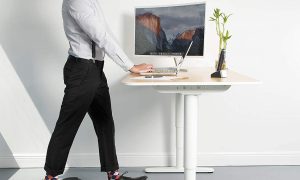
📷 Photo by nytimes.com